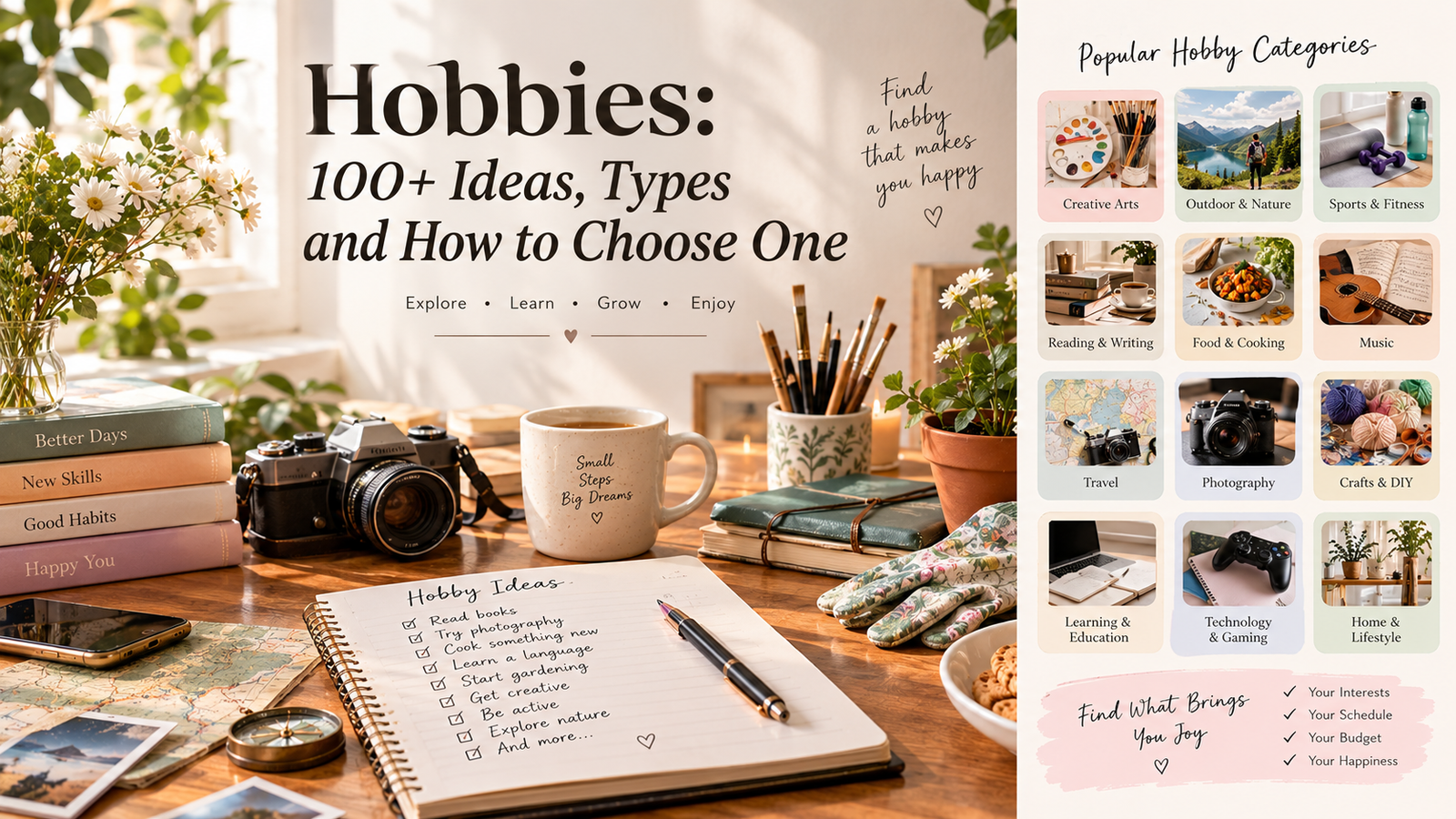

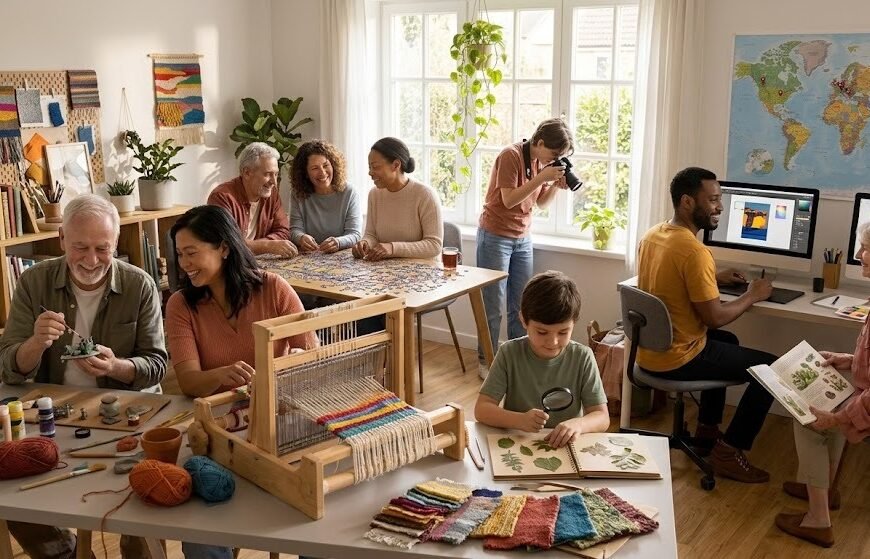
A good hobby can make free time more enjoyable, help you explore new interests and give you an opportunity to learn skills. Some people enjoy reading or gardening while others prefer sports photography, cooking or learning a language.
If you are unsure where to begin exploring different hobbies can help you find activities that suit your interests, schedule and budget. You do not need expensive equipment or advanced skills to get started.
This guide covers popular hobby ideas, different categories, affordable options and practical tips for choosing a hobby you enjoy.
What Are Hobbies?
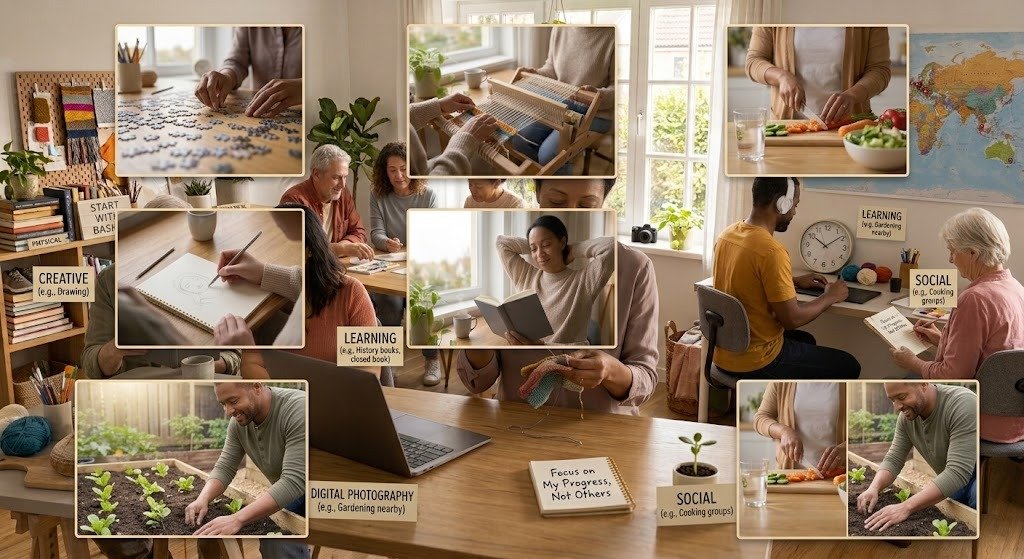
Hobbies are activities people choose to do during their free time for enjoyment, relaxation, learning or personal interest. They may involve creating something, staying active exploring a subject or spending time with others.
Examples include reading books, playing sports, painting , gardening , cooking and photography. An interest might be history for example while a related hobby could be reading historical books or visiting museums.
Unlike obligations, hobbies are generally voluntary. They do not need to earn money or produce measurable results to be worthwhile.
What Are the Different Types of Hobbies?
Hobbies can be grouped by interest setting or activity. Some fit into more than one category such as photography which can be both a creative and outdoor hobby.
1. Creative Hobbies
Creative hobbies let you express ideas and make original things.
Examples include:
- Drawing and painting
- Creative writing and poetry
- Photography
- Calligraphy
- Knitting and crocheting
- Embroidery
- Pottery and clay crafts
- Jewelry making
- Playing musical instruments
- Singing and songwriting
- Digital illustration
- Scrapbooking
- Origami
- Fashion sketching
- Handmade cards
Start with simple supplies such as a notebook for writing or a phone for photography before buying specialized equipment.
2. Physical and Sports Hobbies
Physical hobbies offer enjoyable ways to move, practice coordination and participate in recreational activities.
Examples include:
- Walking and cycling
- Swimming
- Dancing
- Football and basketball
- Badminton
- Volleyball
- Table tennis
- Yoga
- Tennis
- Recreational skating
- Hiking on suitable routes
- Martial arts classes
- Recreational gymnastics
- Stretching
- Learning new dance styles
Choose activities that suit your abilities, interests and available facilities. You do not need to compete or join a gym to enjoy an active hobby. The CDC’s physical activity guidance provides further information about physical activity and well being.
3. Indoor Hobbies
Indoor hobbies are convenient when you prefer activities at home or have limited time and space.
Examples include:
- Reading books
- Journaling
- Solving puzzles
- Playing chess
- Cooking and baking
- Sewing
- Learning a language
- Practicing an instrument
- Building model kits
- Caring for houseplants
- Watching educational documentaries
- Organizing a collection
- Making greeting cards
- Learning basic coding
- Creating handmade crafts
Many of these hobbies require little space and can fit into short breaks or weekend routines.
4. Outdoor and Nature Hobbies
Outdoor hobbies help you explore your surroundings and enjoy nature.
Examples include:
- Gardening
- Growing herbs
- Birdwatching
- Nature photography
- Visiting parks
- Picnicking
- Nature journaling
- Observing the night sky
- Sketching landscapes
- Exploring local history
- Walking nature trails
- Community gardening
- Identifying plants with reliable guides
- Reading outdoors
- Participating in community cleanups
If you do not have a garden consider growing plants in containers or observing birds from a window. Choose outdoor activities that suit your location and conditions.
5. Social Hobbies
Social hobbies involve sharing activities with friends, family or people with similar interests.
Examples include:
- Joining a book club
- Playing board games
- Attending cooking classes
- Singing in a community choir
- Joining a photography group
- Taking language classes
- Playing team sports
- Joining a theater group
- Attending craft workshops
- Participating in a debate club
- Organizing movie discussions
- Joining a walking group
- Volunteering
- Hosting a reading group
- Taking part in group art activities
Social hobbies can be as simple as playing a regular game with friends or discussing books in a small group.
6. Learning and Intellectual Hobbies
Learning hobbies lets you explore subjects without the pressure of exams or qualifications.
Examples include:
- Reading nonfiction
- Learning a foreign language
- Studying world history
- Exploring astronomy
- Solving logic puzzles
- Playing chess
- Learning coding
- Studying geography
- Researching family history
- Exploring architecture
- Learning about different cultures
- Studying scientific concepts
- Writing book reviews
- Exploring art history
- Practicing public speaking
Choose one subject that interests you and explore it through books, lessons or small personal projects.
7. Digital and Technology Hobbies
Digital hobbies use computers or phones for creative expression and learning.
Examples include:
- Graphic design
- Video editing
- Digital drawing
- Website design
- Coding
- Photo editing
- Blogging
- Digital storytelling
- Creating presentations
- Making digital music
- Learning animation
- Designing simple games
- Producing educational videos
- Digital illustration
- Building a personal portfolio
These hobbies can help you explore technical and creative skills but you do not have to turn them into a business or career.
8. Practical and Everyday Hobbies
Practical hobbies involve learning useful skills or making everyday tasks more interesting.
Examples include:
- Cooking
- Baking bread
- Sewing and clothing repairs
- Growing herbs
- Arranging flowers
- Making handmade gifts
- Upcycling household items
- Collecting recipes
- Making greeting cards
- Caring for houseplants
- Planning room layouts
- Creating handmade decorations
- Learning basic craft techniques
- Organizing collections
- Making simple home decorations
These activities can develop useful skills while giving you something enjoyable to do.
Which Hobbies Are Best for Different Interests?
The best hobby depends on what you want from your free time.
| Interest | Hobbies to Try | Starting Requirements |
| Creativity | Drawing writing photography | Paper notebook or phone |
| Relaxation | Reading journaling plant care | Book notebook or plant |
| Social connection | Board games clubs classes | Other participants |
| Physical activity | Walking dancing badminton | Suitable space |
| Learning | Language study coding history | Learning materials |
| Practical skills | Cooking sewing crafts | Basic supplies |
| Digital creation | Design editing blogging | Suitable device |
| Outdoor exploration | Nature walks birdwatching | Accessible outdoor location |
You can also combine interests. For example, someone who enjoys writing and nature could keep a nature journal.
What Are Some Inexpensive Hobbies to Try?
Many hobbies can be started with items you already own or free resources.
- Reading: Borrow books or exchange them with friends.
- Writing: Keep a journal or write short stories.
- Walking: Explore suitable public routes.
- Drawing: Start with paper and pencils.
- Language learning: Use free learning materials.
- Photography: Begin with a phone camera.
- Gardening: Grow suitable plants from seeds or cuttings.
- Cooking: Try recipes using available ingredients.
- Chess: Learn the rules and practice with a friend.
- Birdwatching: Observe birds from a window or public space.
- Origami: Use paper you already have.
- Puzzles: Try free word games or logic puzzles.
Try a simple version of an activity before spending money. If you enjoy it you can decide whether additional supplies or lessons are worthwhile.
How Do You Choose the Right Hobby?
Choosing a hobby becomes easier when you consider your interests, time budget and preferred environment.
Start With Your Interests
Think about what naturally attracts your attention. If you enjoy stories, try reading or writing. If you like creating things, explore drawing, photography or crafts.
Consider Your Time and Budget
Some hobbies fit into short breaks while others require longer sessions. Choose an activity that works with your routine and start with affordable materials.
Decide Whether You Prefer Solo or Group Activities
Reading, drawing and puzzles may suit people who enjoy quiet time. Classes, clubs and recreational sports offer opportunities to interact with others. You can also enjoy both.
Experiment Before Committing
Try an activity for a few sessions and ask yourself:
- Did I enjoy it?
- Was it manageable with my schedule?
- Was the cost reasonable?
- Would I like to do it again?
You do not need to continue a hobby that does not suit you. Trying different activities is part of discovering your interests.
Can Hobbies Help With Personal and Career Development?
Some hobbies provide opportunities to practice skills that may also be useful in education or work.
- Writing: Practice organizing ideas and communicating clearly.
- Photography: Explore visual composition.
- Team sports: Practice cooperation.
- Coding: Explore technical problem solving.
- Volunteering: Gain experience supporting community activities.
- Graphic design: Practice visual communication.
Relevant hobbies may strengthen a résumé when they genuinely connect to a role. Indeed’s guide to hobbies for a résumé offers examples and advice for presenting interests in professional applications.
However not every hobby needs a career benefit. Reading fiction, gardening or playing music can be worthwhile simply because you enjoy them.
What Common Mistakes Should You Avoid?
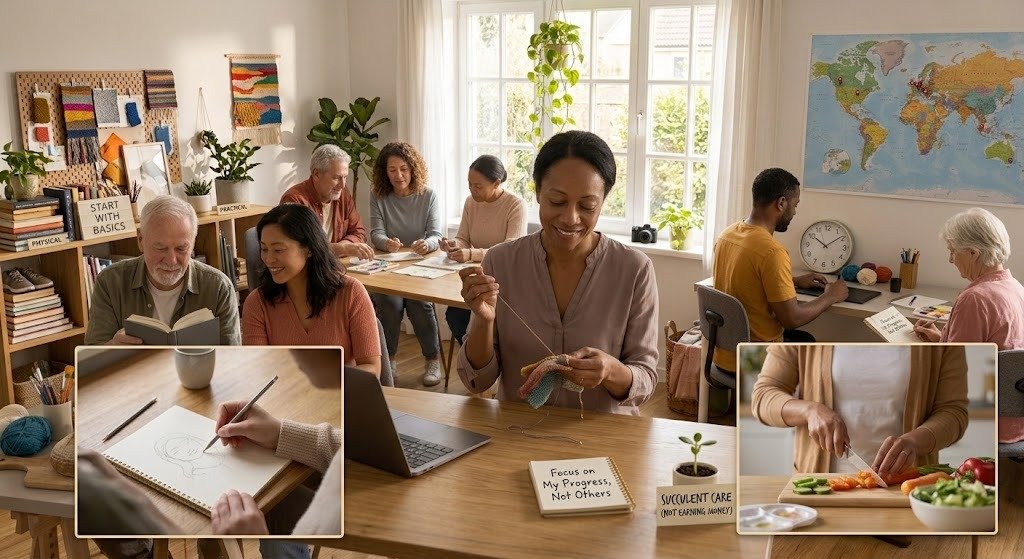
A few common mistakes can make a new hobby harder to maintain.
- Following trends only: Choose an activity that interests you personally.
- Spending too much initially: Start with basic supplies.
- Expecting immediate results: Give yourself time to learn.
- Starting too many hobbies: Explore a few options first.
- Turning every interest into work: A hobby does not need to earn money.
- Ignoring your routine: Choose something that fits around your responsibilities and rest.
- Comparing your progress with others: Focus on your own enjoyment and learning.
The goal is to find an activity you enjoy, not another source of pressure.
Conclusion
Hobbies offer ways to explore interests, enjoy free time, learn skills and connect with others. From reading and gardening to sports crafts and digital design there are options for different budgets and schedules.
Start with one activity that interests you, give yourself time to explore it and try something else if it does not suit you. The best hobby is one that fits your life and that you genuinely enjoy.
FAQs
What are the most common examples of hobbies?
Common hobbies include reading, cooking, gardening, walking , photography , drawing, swimming , writing and playing sports. The right choice depends on personal interests, time and resources.
What are some good hobbies for beginners?
Reading, journaling , drawing , walking, simple cooking and language learning are accessible starting points. Many require little equipment or previous experience.
What hobbies can I do at home?
You can read, write , bake, draw, sew , solve puzzles, learn a language, care for plants or explore digital design. Choose activities that suit your space and budget.
What hobbies can I include on a résumé?
Writing photography, coding graphic design, volunteering and team sports may be relevant to particular roles. Include genuine interests and describe your experience honestly.
How can I find a hobby if I do not know what I enjoy?
Try activities from different categories such as creativity, learning movement and social interaction. Begin with affordable options and notice which activities you want to repeat.
Do hobbies have to be productive?
No. Hobbies can provide enjoyment, relaxation, curiosity or social connection without producing a measurable result. You do not need to turn a personal interest into a career.

 By


 By