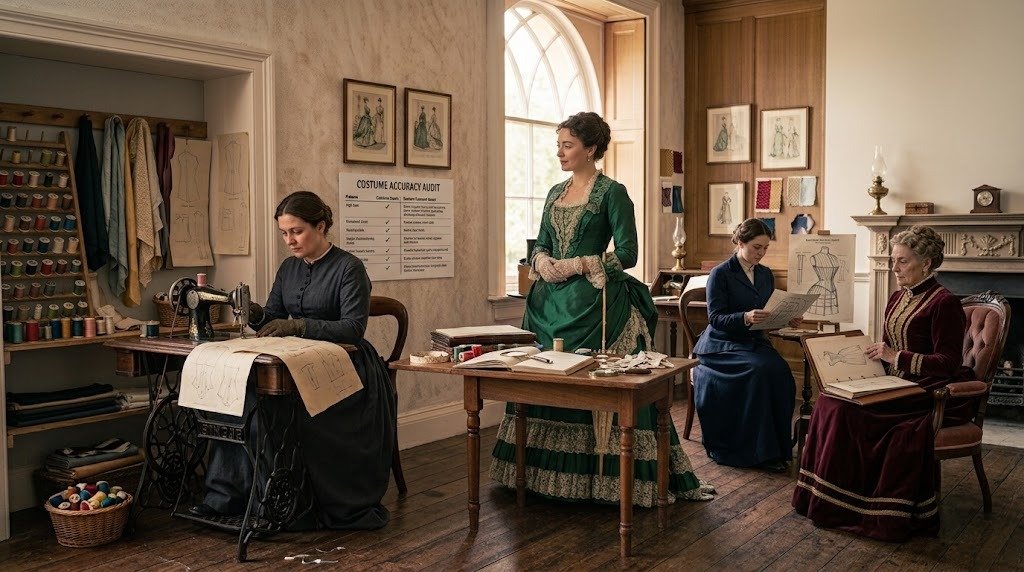

Late Victorian fashion covers the later decades of Queen Victoria’s reign, especially the 1870s 1880s and 1890s. During this period women’s clothing changed from structured bustle dresses to simpler skirts and the large sleeves popular in the 1890s.
Social class, new manufacturing methods and changing lifestyles also influenced clothing. Understanding these styles helps readers distinguish historical garments and recognize how women’s fashion evolved before the Edwardian era.
What Was Late Victorian Fashion?
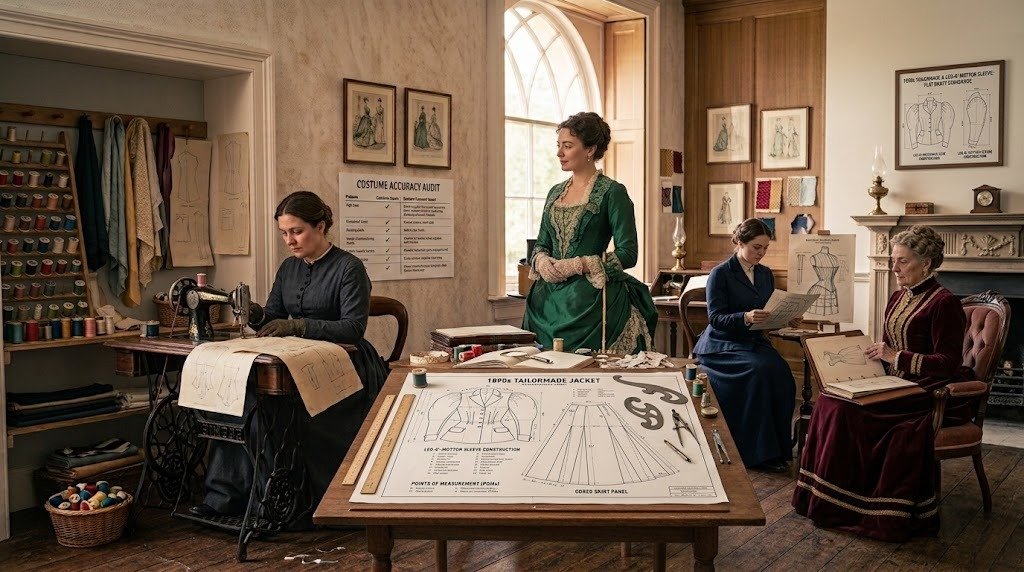
Late Victorian fashion refers to clothing worn during the final decades of the Victorian era which ended in 1901. Women’s outfits often included fitted bodices, long skirts, corsets and carefully arranged fabric.
There was no single style throughout this period. Bustles shaped dresses during much of the 1870s and 1880s while the 1890s introduced prominent upper sleeves and more balanced skirt silhouettes. Clothing also varied according to income, occupation location and occasion.
How Did Late Victorian Fashion Change by Decade?
The shape of a dress is one of the easiest ways to recognize different late Victorian styles.
| Period | Main Silhouette | Key Features |
| 1870–1876 | Rearfocused volume | Draped overskirts trains early bustle styles |
| 1877–1882 | Long narrow shape | Princessline dresses slimmer skirts |
| 1883–1889 | Pronounced bustle | Structured rear projection and elaborate trims |
| 1890–1894 | Large upper sleeves | Gigot sleeves fitted bodices |
| 1895–1901 | Evolving silhouettes | Tailored separates walking costumes formal gowns |
These periods represent broad trends. Styles overlapped and changes did not happen overnight.
The 1870s: The First Bustle Era
During the 1870s fashionable skirts shifted away from the wide circular shape associated with midcentury crinolines. More fabric was arranged at the back creating a fuller rear silhouette.
Pleats, ruffles , overskirts and trains helped emphasize this shape. Some dresses had soft draping while others used more structured support.
The Early 1880s: The NaturalForm Silhouette
In the late 1870s and early 1880s some dresses emphasized a long narrow shape. Princessline dresses were especially recognizable because their long vertical seams created a fitted silhouette without a separate horizontal waist seam.
Bustle styles did not disappear completely. Different silhouettes continued to overlap depending on the year occasion and wearer’s preferences.
The MidtoLate 1880s: The Second Bustle Era
Bustles returned in a more pronounced form during the mid1880s. Some dresses featured a distinct projection at the back often enhanced by bows, pleats and decorative fabric.
This silhouette differed from the softer draping of some 1870s dresses. It is also frequently exaggerated in modern Victorian inspired costumes which sometimes combine details from different decades.
The 1890s: Large Sleeves and Changing Styles
In the 1890s the exaggerated bustle was no longer the dominant fashionable silhouette. Attention shifted toward large upper sleeves often called gigot or leg of mutton sleeves paired with fitted bodices and generally simpler skirts.
Shirtwaists or tailored blouses worn with skirts became important for everyday clothing. These outfits provided an alternative to elaborate onepiece dresses and reflected a wider range of clothing needs.
What Were the Most Popular Late Victorian Dresses?
Women wore different outfits for different activities and occasions. Day dresses: Usually featured higher necklines and long sleeves with decoration ranging from simple to elaborate.
Walking costumes: Designed for outdoor activities and visits often combining a skirt with a fitted bodice or jacket.
Evening gowns: Commonly featured lower necklines, fine fabrics and more decorative details than ordinary daytime clothing.
Tea gowns: Informal indoor garments that could offer a more relaxed alternative to highly structured formal dresses.
Princessline dresses: Used long vertical seams to create an elongated fitted appearance.
Shirtwaists and skirts: Became especially recognizable in the 1890s and offered versatile everyday clothing.
The garment’s purpose influenced its construction fabric and decoration. Wealthier women could afford more specialized outfits while others reused and altered their clothing.
What Undergarments Shaped Late Victorian Clothing?
Undergarments helped create the fashionable outline of a dress. Corsets: Supported the bodice and shaped the torso. Their construction and fit varied so not every woman wore the same style or followed identical dressing practices.
Bustles: Supported fabric at the back of the skirt creating the rearfocused silhouette associated with the 1870s and 1880s.
Petticoats: Added shape warmth and coverage beneath skirts. Unlike the large cage crinolines of the 1850s and 1860s late Victorian bustles concentrated more of the skirt’s volume toward the back.
What Fabrics Colors and Decorations Were Used?
Late Victorian clothing used silk cotton wool velvet and other textiles. Fabric choices depended on the season, occasion and budget.
Lace embroidery ribbons, bows, pleats and layered overskirts decorated many fashionable garments. Improvements in textile production and dyeing expanded the range of available fabrics and colors although expensive materials remained less accessible to women with limited budgets.
When researching a historical dress consider its fabric and decoration alongside its silhouette and date.
Which Accessories Completed a Late Victorian Outfit?
Accessories helped complete an outfit and often reflected its intended use.
- Hats and bonnets: Varied in shape and decoration according to fashion and occasion.
- Parasols: Offered sun protection and could serve as decorative accessories.
- Gloves: Were worn for various formal and social occasions.
- Shoes and boots: Included buttoned or laced boots as well as footwear suited to eveningwear.
- Bags and small accessories: Completed outfits depending on the activity and period.
For a historically accurate look choose accessories that match the specific decade rather than mixing styles from the entire Victorian era.
How Did Social Class and Technology Influence Fashion?
Late Victorian clothing reflected differences in income and access to dressmaking. Wealthier women could afford fine fabrics, specialist dressmakers and multiple outfits. Other women relied on practical garments, home sewing repairs and alterations.
Sewing machines, textile manufacturing fashion publications and readymade clothing influenced how garments were produced and circulated. However fashionable clothing remained more accessible to some groups than others.
Changing expectations for women’s lives also affected clothing. By the 1890s practical garments attracted greater attention as more women participated in public activities including cycling and sport. Traditional formal clothing nevertheless remained important.
How Can You Identify Late Victorian Fashion Accurately?
Start with the overall silhouette instead of relying on a single decorative detail.
- Check the skirt: Pronounced rear volume may suggest a bustle-era dress.
- Examine the sleeves: Large upper sleeves are associated with the 1890s.
- Study the bodice: Long vertical seams can indicate a princessline dress.
- Look at accessories: Hats, gloves and footwear provide additional clues.
- Compare historical references: Dated museum garments and period fashion illustrations are more reliable than undated costume photographs.
No single feature proves a garment’s exact date. Several details should be considered together.
Late Victorian Fashion vs. Edwardian Fashion
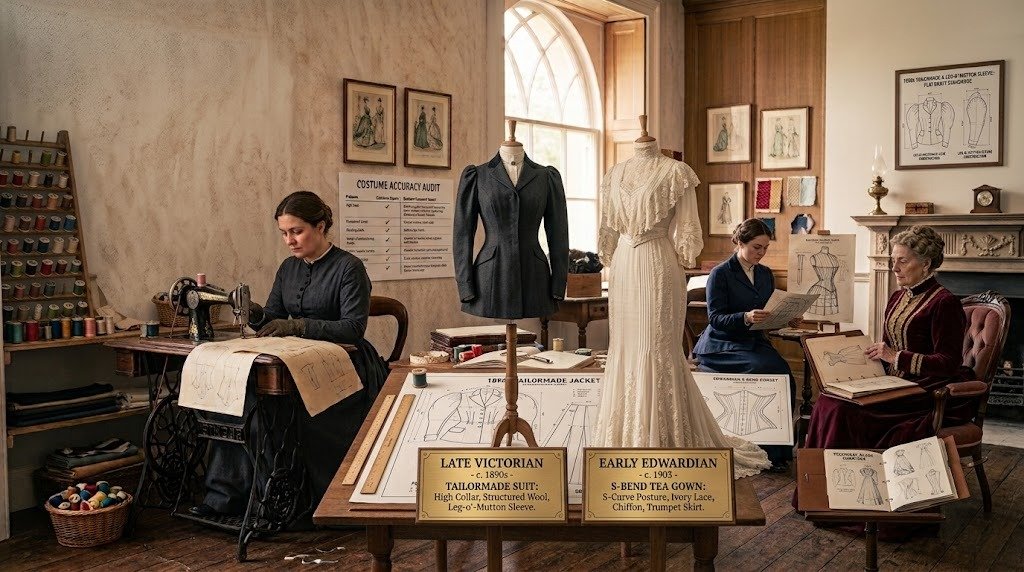
Late Victorian fashion gradually transitioned into Edwardian styles after Queen Victoria’s reign ended in 1901. The change was not immediate and some late1890s features continued into the new century.
| Feature | Late Victorian Fashion | Early Edwardian Fashion |
| Period | 1870s–1901 | Early 1900s |
| Skirts | Bustled in earlier decades; simpler by the 1890s | Evolving long flowing silhouettes |
| Sleeves | Large sleeves prominent in the 1890s | Shapes changed through the decade |
| Historical context | Victorian dress customs | Fashion entering the twentieth century |
These are general distinctions. Accurate dating requires examining a garment’s construction and details.
Conclusion
Late Victorian fashion evolved from the bustle styles of the 1870s and 1880s to the large sleeves and changing everyday clothing of the 1890s. These developments reflected changes in garment construction manufacturing and women’s lifestyles.
For historical research or costume planning begin with the decadespecific silhouette. Then compare the bodice skirt fabrics and accessories with dated historical examples to understand the outfit more accurately.
FAQs
What years are considered late Victorian fashion?
Late Victorian fashion generally covers the 1870s 1880s and 1890s ending around 1901.
What was the purpose of a Victorian bustle?
A bustle supported the back of a skirt to create a fuller rear silhouette. Its shape varied throughout the late Victorian period.
What were the main features of 1890s fashion?
Large gigot sleeves, fitted bodices, simpler skirt shapes and shirtwaists were recognizable features of 1890s women’s clothing.
Did all late Victorian women wear corsets?
Corsetry was common in fashionable dress but designs and individual practices varied. Some women supported dress reform or preferred alternative garments.
What is the difference between a princessline dress and a bustle dress?
A princessline dress uses long vertical seams to create a fitted shape. A bustle dress is identified by the volume concentrated at the back of the skirt.
How can I create a historically accurate late Victorian outfit?
Choose a specific decade and occasion then research the silhouette sleeves skirt support fabrics and accessories using dated historical references.

 By
By
 By
By
 By
By