

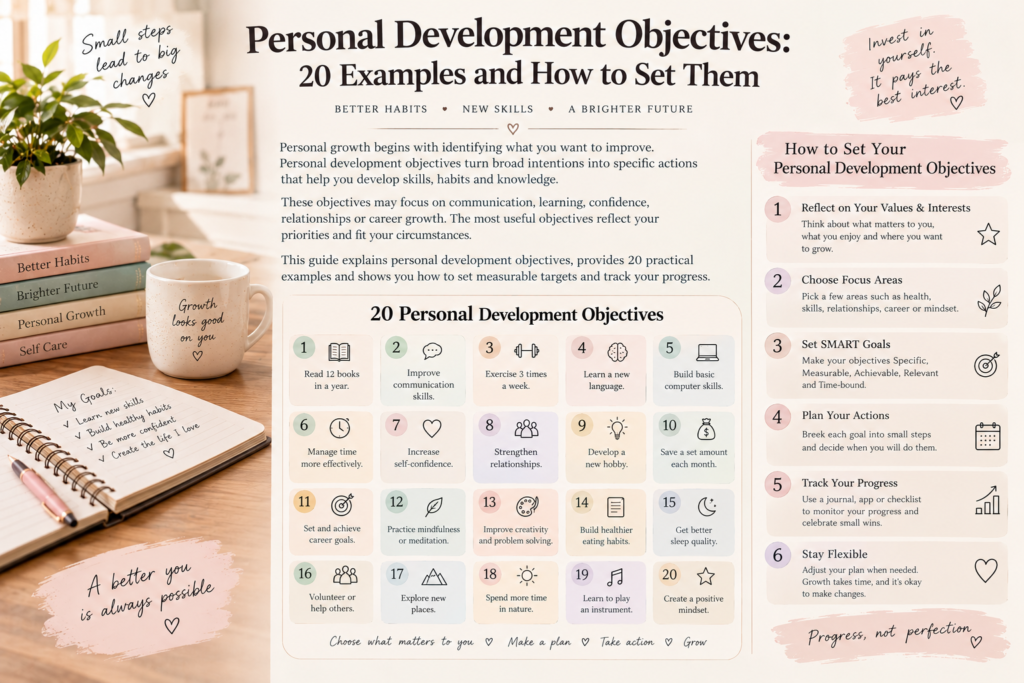
Personal growth begins with identifying what you want to improve. Personal development objectives turn broad intentions into specific actions that help you develop skills, habits and knowledge.
These objectives may focus on communication, learning confidence relationships or career growth. The most useful objectives reflect your priorities and fit your circumstances.
This guide explains personal development objectives, provides 20 practical examples and shows you how to set measurable targets and track your progress.
What Are Personal Development Objectives?
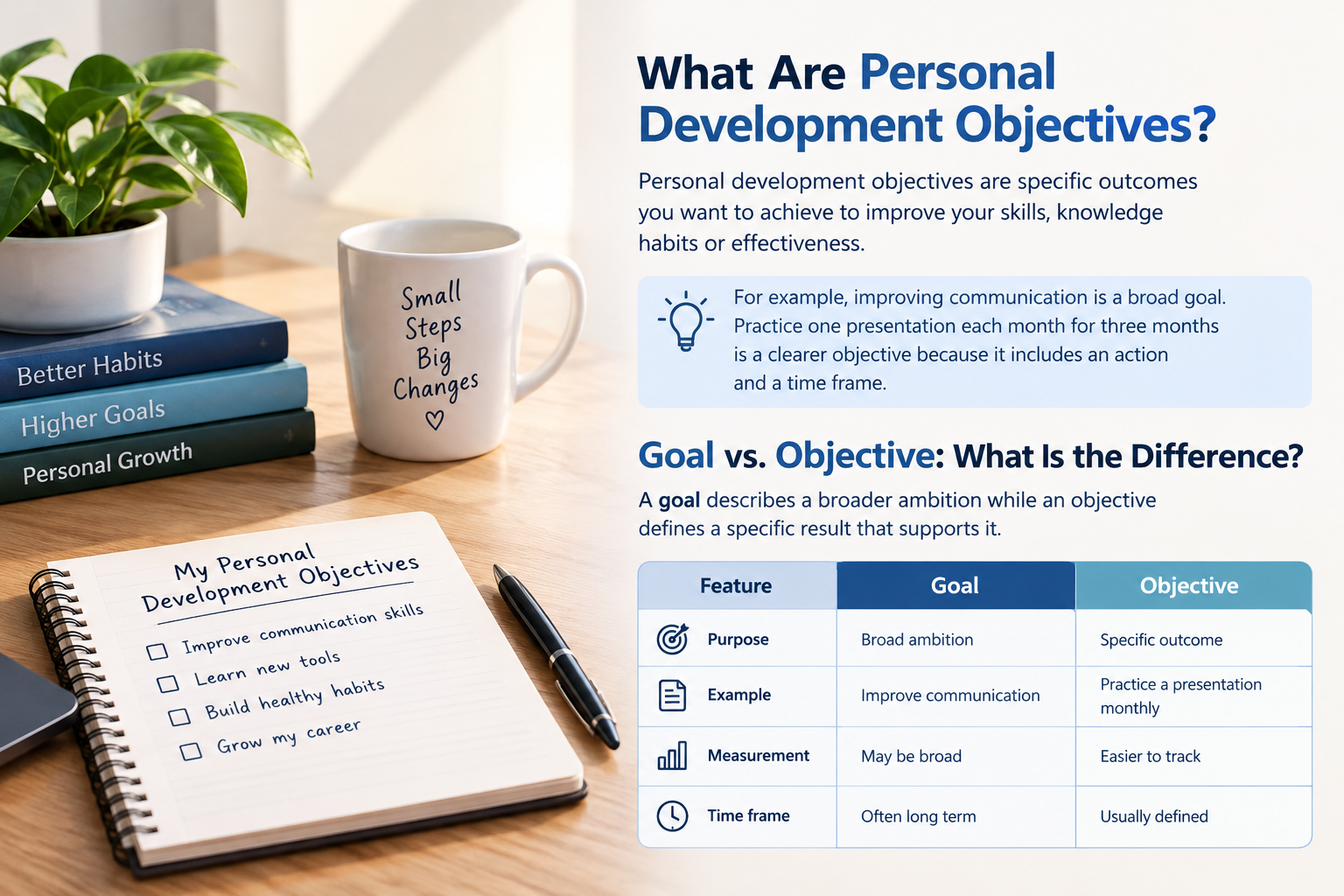
Personal development objectives are specific outcomes you want to achieve to improve your skills, knowledge habits or effectiveness.
For example, improving communication is a broad goal. Practice one presentation each month for three months is a clearer objective because it includes an action and a time frame.
Goal vs. Objective: What Is the Difference?
A goal describes a broader ambition while an objective defines a specific result that supports it.
| Feature | Goal | Objective |
| Purpose | Broad ambition | Specific outcome |
| Example | Improve communication | Practice a presentation monthly |
| Measurement | May be broad | Easier to track |
| Time frame | Often long term | Usually defined |
For example your goal might be to advance your career while your objective could be to complete a relevant course within eight weeks.
Why Are Personal Development Objectives Important?
Clear objectives help you focus on priorities and turn intentions into practical steps. They can help you:
- Set direction: Identify what you want to improve.
- Track progress: Measure completed actions and milestones.
- Develop skills: Practice communication organization or problem solving.
- Make decisions: Choose learning opportunities that fit your needs.
- Review priorities: Adjust your plan when circumstances change.
Objectives provide direction but achieving them still depends on your actions, resources and circumstances.
What Are 20 Examples of Personal Development Objectives?
Use these examples as starting points and adjust them to your needs.
- Improve communication: Practice active listening and give one short presentation each month for three months.
- Manage time better: Plan the next day’s priorities each evening for four weeks.
- Develop emotional awareness: Journal about emotions and possible triggers three times a week for one month.
- Strengthen decisionmaking: Compare options and consequences before making three important decisions this month.
- Build speaking confidence: Share one prepared idea or question in a suitable group discussion each week for six weeks.
- Learn a new skill: Complete a beginner course relevant to your interests within eight weeks.
- Improve reading habits: Read for 15 minutes on four days each week for a month.
- Develop critical thinking: Evaluate the evidence behind one claim or article each week for six weeks.
- Improve problem solving: Identify one recurring problem each week and consider at least two possible solutions.
- Develop creativity: Complete one small creative project every two weeks for two months.
- Strengthen relationships: Arrange one meaningful conversation or shared activity each week for a month.
- Practice assertiveness: Express a preference or boundary clearly and respectfully when appropriate.
- Improve organization: Spend ten minutes organizing your workspace or digital files three times a week.
- Develop leadership: Coordinate a small group task or project within two months.
- Improve digital skills: Learn three useful features of a relevant software tool within four weeks.
- Create a learning routine: Schedule two focused learning sessions each week for six weeks.
- Build a daily routine: Follow a manageable morning or evening routine five days a week for a month.
- Support personal wellbeing: Schedule one enjoyable restorative activity each week for a month.
- Improve financial awareness: Record spending and review categories weekly for one month.
- Review progress: Spend 15 minutes reviewing achievements, challenges and next steps at the end of each month.
These are examples rather than universal targets. Adjust the frequency and deadlines to match your responsibilities and resources.
How Do You Write Effective Personal Development Objectives?
The SMART framework is a useful way to make objectives clearer.
SMART objectives are:
- Specific: State what you want to achieve.
- Measurable: Decide how to track progress.
- Achievable: Choose a realistic target.
- Relevant: Connect it to your priorities.
- Timebound: Set a deadline or review date.
The CDC’s SMART framework provides further guidance on structuring clear objectives.
Example of a SMART Objective
Broad goal: I want to improve my writing.
| Element | Example |
| Specific | Improve article writing skills |
| Measurable | Complete four practice articles |
| Achievable | Write one article per week |
| Relevant | Develop skills for a content writing role |
| Timebound | Finish in four weeks |
Final objective: I will write one practice article each week for four weeks and review its structure, clarity , grammar and search intent.
How Can You Track Your Objectives?
Use a notebook calendar or spreadsheet to monitor progress.
- Record your objective. Write it clearly.
- List the actions. Break it into manageable tasks.
- Choose a measure. Track completed lessons, practice sessions or projects.
- Review regularly. Check progress weekly or monthly.
- Adjust when necessary. Change the method or deadline if your circumstances change.
For example, someone learning a digital skill could record completed lessons and practical projects. Tracking should help you learn not make every missed target feel like failure.
What Common Mistakes Should You Avoid?
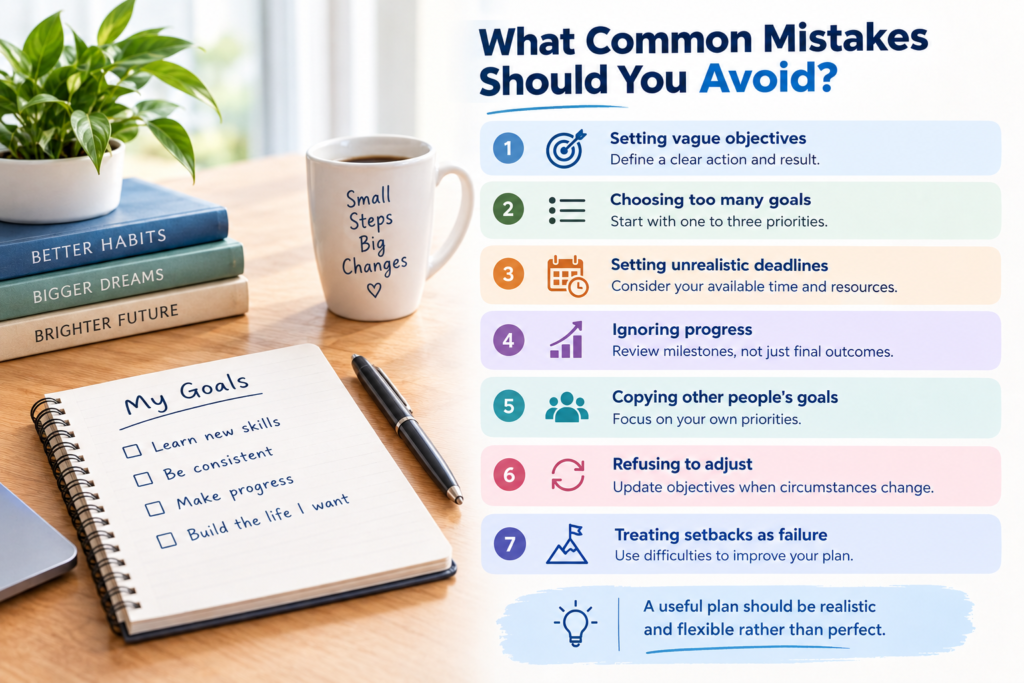
- Setting vague objectives: Define a clear action and result.
- Choosing too many goals: Start with one to three priorities.
- Setting unrealistic deadlines: Consider your available time and resources.
- Ignoring progress: Review milestones, not just final outcomes.
- Copying other people’s goals: Focus on your own priorities.
- Refusing to adjust: Update objectives when circumstances change.
- Treating setbacks as failure: Use difficulties to improve your plan.
A useful plan should be realistic and flexible rather than perfect.
Conclusion
Personal development objectives turn broad ambitions into clear actions that you can practice and review. They can help you improve communication, learning organization relationships and career related skills.
Start with one meaningful objective, make it measurable and choose a realistic deadline. Review your progress and adjust your plan as needed. The aim is to make steady progress in the areas that matter most to you.
FAQs
What are five examples of personal development objectives?
Examples include improving communication, managing time, learning a skill, strengthening decisionmaking and becoming more organized. Each objective becomes clearer when it includes an action and a deadline.
What is the difference between personal and professional development objectives?
Personal objectives may focus on relationships, habits and self awareness. Professional objectives usually focus on workplace skills, knowledge and career progression although the two areas can overlap.
How many objectives should I set at once?
Start with one to three priorities. This makes it easier to give each objective enough attention without overloading your schedule.
How often should I review my objectives?
Review actions weekly and assess overall progress monthly. Adjust the schedule if it becomes difficult to maintain or no longer supports your priorities.
Can personal development objectives change over time?
Yes. Your priorities, resources and circumstances may change. Revise objectives when they no longer fit your needs or when another approach becomes more useful.
What should I do if I do not achieve an objective?
Identify what prevented progress and decide whether you need more time, a smaller target, a different method or additional support. An unfinished objective can still teach you something useful.


 By




 By