
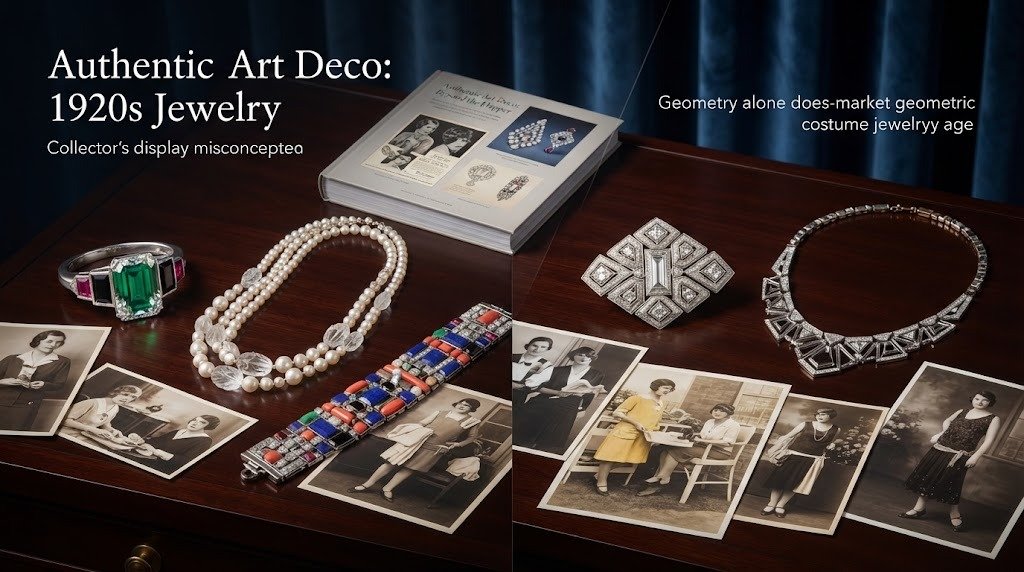

The 1920s jewelry style is known for geometric designs, long pearl necklaces, diamonds colored gemstones and polished metals. Art Deco was a major influence but jewelry during the decade was more varied than the familiar flapper image suggests.
People wore different pieces depending on occasion, budget , personal taste and social setting. This guide covers popular 1920s jewelry styles, materials , gemstones , major jewelry houses, cultural influences and ways to distinguish authentic period jewelry from modern Art Deco inspired pieces.
What Did 1920s Jewelry Look Like?
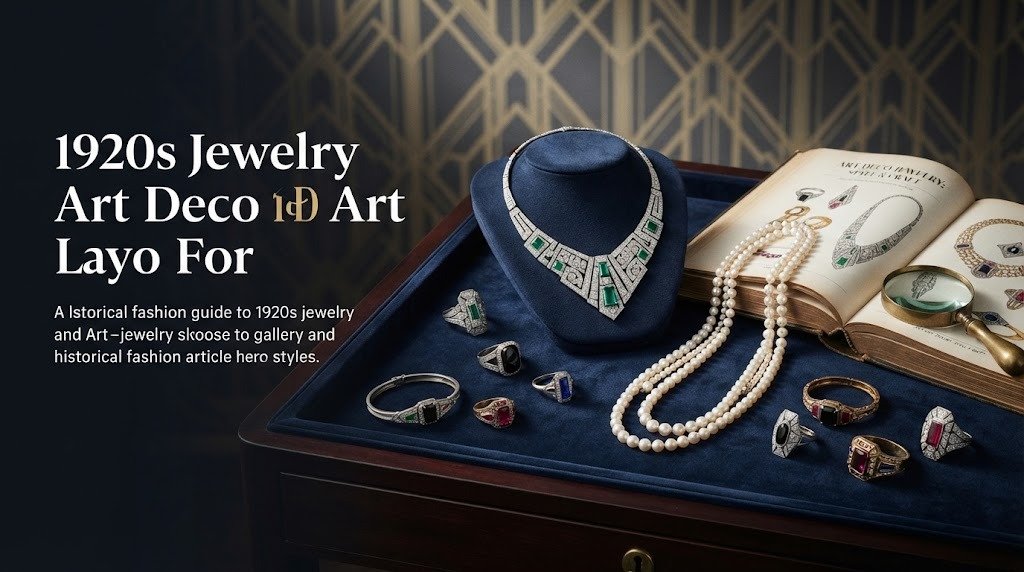
1920s jewelry combined geometric forms, precious metals, pearls, diamonds colored gemstones and strong contrasts. Art Deco became one of the defining influences particularly after the 1925 Paris Exposition.
Common characteristics included geometric and symmetrical shapes, straight lines, platinum and white gold pearls, diamonds onyx emeralds, rubies and sapphires. Long necklaces, dangling earrings, geometric bracelets, brooches , dress clips and rings were also popular.
However not every piece from the 1920s was Art Deco. Older jewelry traditions continued alongside newer designs so Art Deco is best understood as a dominant influence rather than a label for every piece made between 1920 and 1929.
How Did Art Deco Influence 1920s Jewelry?
Art Deco introduced a stronger interest in geometry, symmetry contrast and modern materials. The 1925 Paris exposition showcased modern decorative arts and helped establish the design language associated with the movement.
Jewelry reflected this interest through triangles, circles , rectangles , chevrons fan shapes, repeated lines and stylized natural forms.
Art Deco was influenced by several artistic and cultural developments including Cubism graphic design, international decorative traditions and renewed Western interest in ancient Egypt following the discovery of Tutankhamun’s tomb.
The result was jewelry that often looked structured, architectural and modern.
What Types of Jewelry Were Popular in the 1920s?
1920s jewelry included a wide range of accessories.
1920s Necklaces
Long necklaces and pearl strands became especially recognizable. Sautoirs pendant necklaces, tassel necklaces and gemstone designs were also used.
Long necklaces worked well with the relatively simple silhouettes of 1920s dresses because they created a strong vertical line without adding complexity to the neckline.
Pearls were particularly important partly because advances in cultured pearl production increased their availability.
1920s Earrings
Shorter hairstyles exposed the ears and neck making earrings more noticeable. Popular styles included long drop earrings, geometric designs, pearl earrings, diamond earrings and colored gemstone pieces. Their vertical shapes complemented the shorter hairstyles and evening dresses of the period.
1920s Bracelets
Bracelets and bangles were important accessories particularly with sleeveless evening dresses. Art Deco bracelets could combine diamonds, emeralds , pearls, rubies enamel or other materials in structured geometric patterns. The simpler clothing silhouettes gave bracelets more visual space.
1920s Brooches and Dress Clips
Brooches could be worn on clothing hats, belts or bags. Designs included geometric forms, gemstones, pearls , flowers , animals and Egyptian inspired motifs. Dress clips were another useful accessory and could sometimes be converted or rearranged for different uses.
What Metals Were Used in 1920s Jewelry?
Platinum
Platinum was one of the most important metals in fine Art Deco jewelry. Its strength allowed jewelers to create detailed settings, fine filigree and delicate millegrain decoration. Its pale appearance also worked particularly well with diamonds.
White Gold
White gold became another important white metal and could provide a similar appearance to platinum at a lower cost.
A whitelooking antique piece should not automatically be identified as platinum however. Professional testing and examination are more reliable than appearance alone.
Gold
Gold remained important throughout the decade. Period jewelry could combine gold with diamonds, pearls, emeralds , rubies and other gemstones. Therefore describing all 1920s jewelry as platinum jewelry would be inaccurate.
Which Gemstones Were Popular in 1920s Jewelry?
The decade used both pale and strongly colored materials. Diamonds were central to many fine Art Deco designs and worked particularly well with platinum. Pearls became one of the most recognizable materials of the period especially in long necklaces and earrings.
Onyx provided a strong black contrast against diamonds, pearls, platinum and white gold. Emeralds, rubies and sapphires added vivid green, red and blue accents.
Other materials including lapis lazuli coral and rock crystal also appeared in Art Deco jewelry. This variety shows that 1920s jewelry was not limited to diamonds and pearls. Strong color contrasts were an important part of the period’s design language.
What Techniques Were Used in Art Deco Jewelry?
The distinctive appearance of Art Deco jewelry depended on both materials and craftsmanship. Millegrain created small beadlike details along metal edges while filigree used delicate metalwork to create decorative patterns.
Jewelry designers also experimented with geometric stone cuts including triangular trapezoid and halfmoon shapes. These techniques helped create the precise and structured appearance associated with high quality Art Deco jewelry.
What Was Convertible Jewelry?
Convertible jewelry was designed to serve more than one purpose. A piece could sometimes be separated or rearranged into different forms. For example certain brooches could become dress clips while earrings could have removable elements.
This allowed one valuable piece to work in different settings making convertible jewelry both fashionable and practical.
How Did Egyptian Revival Influence Jewelry?
The discovery of Tutankhamun’s tomb in 1922 increased Western interest in ancient Egyptian imagery and influenced Art Deco design. Jewelry incorporated motifs such as scarabs, stylized lotus forms, geometric symbols and combinations of blue green red and gold.
This was a modern Western interpretation of Egyptian imagery rather than a direct continuation of ancient Egyptian jewelry traditions. Art Deco also drew inspiration from Asian African South American and other international artistic traditions.
Which Jewelry Houses Were Important?
Several major jewelry houses helped shape the period’s distinctive designs including Cartier Boucheron Van Cleef & Arpels Mauboussin Chaumet Tiffany & Co. Lalique Lacloche Fouquet and Raymond Yard.
These designers experimented with platinum diamonds colored gemstones onyx pearls and international motifs. Their work helped establish many of the geometric and luxurious characteristics now associated with Art Deco jewelry.
How Did Jewelry Fit the Flapper Look?
The popular flapper image often includes a long necklace, dangling earrings, bracelets and sparkling jewelry. These accessories complemented the straight silhouettes of 1920s dresses.
Long necklaces created vertical movement while earrings and bracelets emphasized areas exposed by shorter hairstyles and sleeveless evening clothing. But the flapper image does not represent every woman or every occasion.
Jewelry choices varied according to income age location, social setting and personal preference. Some women wore fine jewelry while others used imitation pearls beads or simpler accessories.
How Can You Identify Authentic 1920s Jewelry?
Start with the clothing and overall silhouette rather than choosing accessories separately. Understanding 1920s fashion can help you coordinate jewelry with the clothing, hairstyle and occasion.
- Overall design and geometric details
- Metal and gemstone types
- Construction and craftsmanship
- Maker’s marks and hallmarks
- Condition and signs of alteration
- Provenance or documented ownership history
Modern jewelry can closely imitate Art Deco designs while genuine older pieces may have been repaired, resized or reset.
For valuable jewelry, professional examination is more reliable than visual appearance alone.
Authentic 1920s Jewelry vs. Modern Art Deco Jewelry
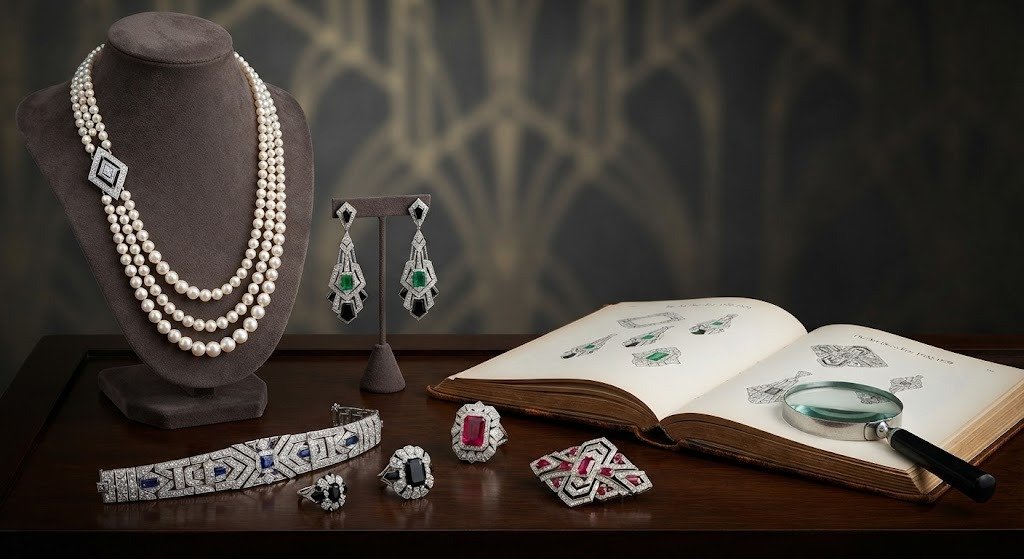
Authentic 1920s jewelry was made during the historical period and may have period construction maker’s marks and documented provenance. Modern Art Decoinspired jewelry is produced later using contemporary manufacturing methods.
It may closely reproduce geometric patterns and historical materials but does not have the same historical age or provenance. Using the term “Art Decoinspired” helps prevent modern reproductions from being mistaken for genuine antiques.
Start with the clothing and overall silhouette rather than choosing accessories separately. A simple historically inspired combination could include a 1920s style dress, a long pearl necklace, drop earrings, one geometric bracelet and a small brooch.
Avoid wearing every possible accessory at once. The best results usually come from balancing the jewelry with the hairstyle, neckline and shape of the clothing.
Modern reproductions can work well for recreating the look as long as they are described as modern or Art Deco inspired rather than authentic 1920s pieces.
All 1920s jewelry was Art Deco.
Art Deco was highly influential but other styles also existed during the decade.
Everyone wore long pearl necklaces.
Pearls were popular but jewelry choices varied by person occasion and income.
1920s jewelry only used diamonds.
Diamonds were important but pearls onyx emeralds rubies sapphires coral lapis lazuli and rock crystal were also used.
Any geometric vintage jewelry is from the 1920s.
Modern jewelry can imitate Art Deco designs so geometry alone does not establish age.
Flapper jewelry represents the entire decade.
The flapper look represents one important part of 1920s fashion not every person’s everyday style.
Conclusion
1920s jewelry combined modern design, traditional craftsmanship, precious metals and colorful gemstones. Art Deco gave the decade its most recognizable visual language but jewelry styles were much more diverse than the familiar flapper image suggests.
Long pearl necklaces, geometric earrings, bracelets , brooches , dress clips, platinum settings, diamonds onyx and colored gemstones all contributed to the era’s distinctive look.
To understand authentic 1920s jewelry it is best to look beyond modern costume versions and compare designs with museum collections period photographs, clothing and hairstyles. This broader context shows why the Art Deco jewelry of the 1920s remains influential today.
FAQs
What jewelry was popular in the 1920s?
Popular styles included long pearl necklaces, dangling earrings, geometric bracelets, bangles brooches , dress clips rings and gemstone jewelry. Art Deco strongly influenced many fashionable designs.
What gemstones were used in 1920s jewelry?
Diamonds and pearls were especially important alongside onyx emeralds rubies sapphires lapis lazuli coral and rock crystal.
Why were pearls popular in the 1920s?
Advances in cultured pearl production increased their availability while their elegant appearance worked well with the simple silhouettes of 1920s fashion.
Was platinum common in 1920s jewelry?
Yes. Platinum was particularly important in fine Art Deco jewelry because its strength allowed detailed settings, filigree and millegrain decoration.
What jewelry did flappers wear?
Flapperinspired fashion is commonly associated with long necklaces, dangling earrings, bracelets and decorative jewelry. However actual jewelry choices varied considerably.
How can you tell if jewelry is really from the 1920s?
Look at its design materials construction hallmarks maker’s marks condition and provenance together. A professional appraisal is recommended for valuable pieces.

 By
By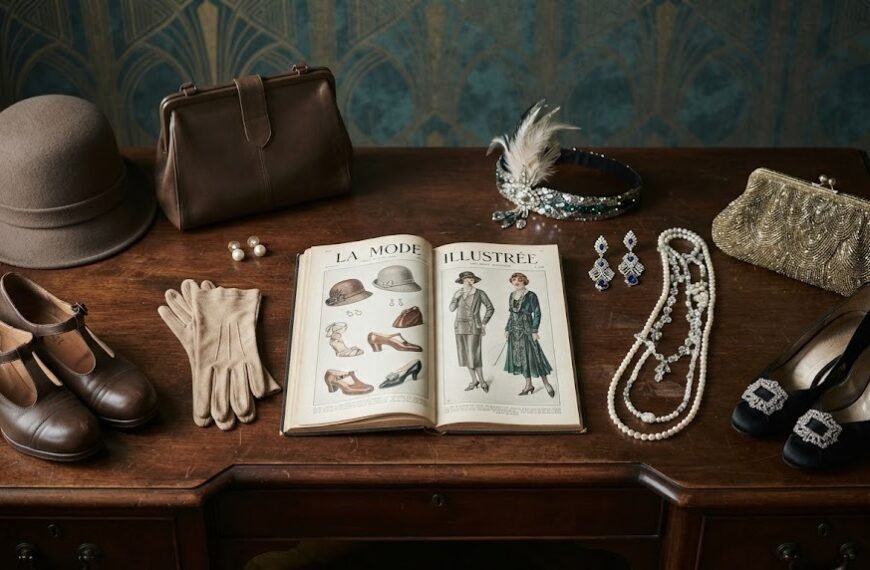

 By
By