
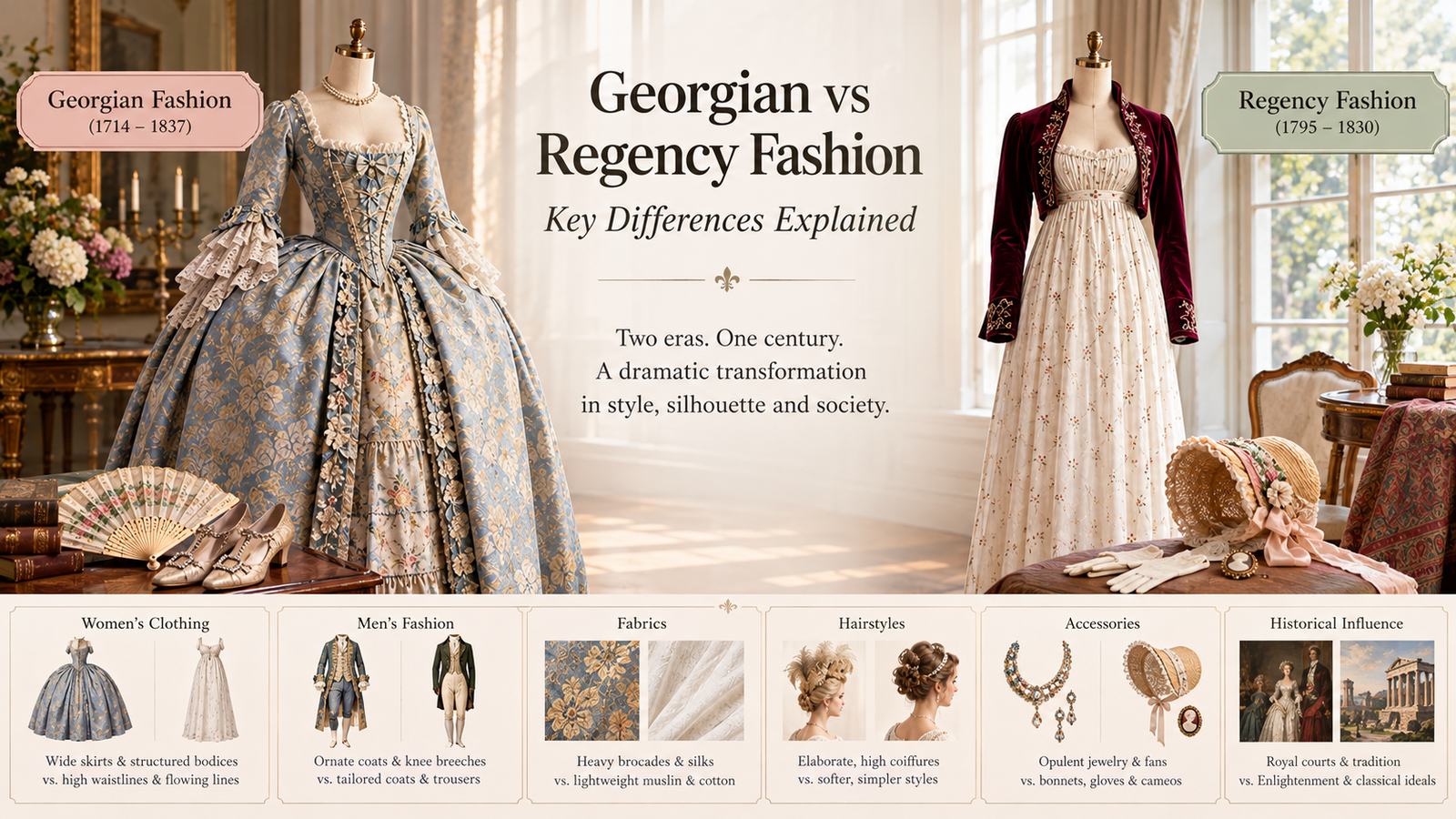

Georgian vs Regency fashion can be confusing because the Regency period falls within the broader Georgian era. Both styles influenced British clothing history but their silhouettes, fabrics and construction changed over time.
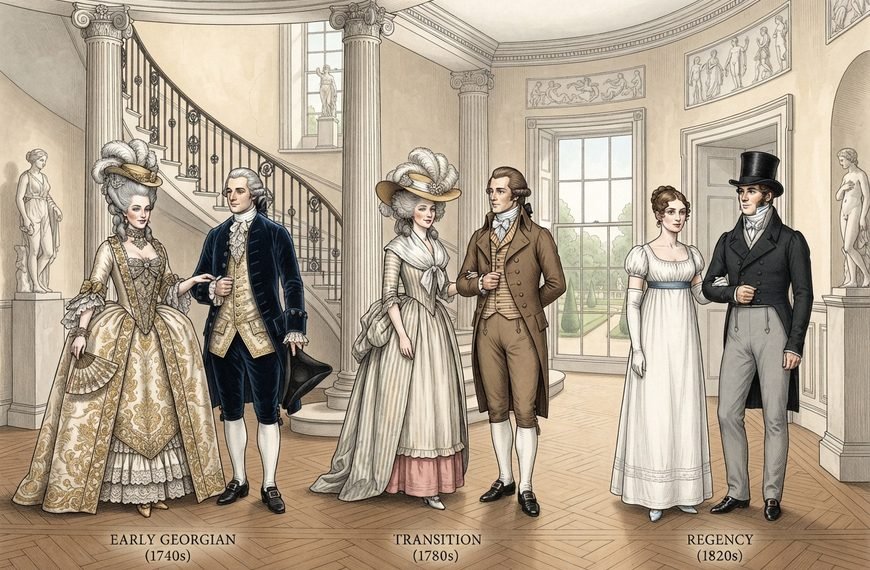
Earlier Georgian women’s gowns often featured structured bodices and wide skirts while fashionable Regency dresses became known for raised waistlines and flowing silhouettes.
This guide compares the main differences in women’s clothing, men’s fashion fabrics, hairstyles and accessories while explaining how historical events influenced these changing styles.
Georgian vs Regency Fashion: What Is the Difference?
Georgian fashion generally refers to British clothing from 1714 to 1830 covering the reigns of the monarchs named George. The Regency period officially lasted from 1811 to 1820 when George Prince Regent governed on behalf of George III.
In fashion history Regency style is often used more broadly for trends from the late 1790s through the 1820s. One of the clearest differences is the changing silhouette although Georgian fashion varied considerably across the eighteenth century.
Many earlier fashionable gowns used fitted bodices and wide skirts supported by panniers or hoops. By the late eighteenth century higher waistlines and lighter dress styles were becoming more popular leading towards the Empire silhouette associated with Regency fashion.
| Feature | Earlier Georgian Fashion | Regency Fashion |
| Period | 1714–late 18th century for earlier styles | Early 19th century especially 1811–1820 |
| Women’s waistline | Usually near the natural waist | Often raised below the bust |
| Skirt shape | Frequently wide and structured | Generally more vertical |
| Fabrics | Silk brocade cotton linen and wool | Muslin cotton silk linen and wool |
| Men’s clothing | Coats waistcoats breeches and stockings | Tailored coats waistcoats neckcloths and increasingly trousers |
| Accessories | Fans decorative shoes lace and elaborate headwear | Bonnets shawls gloves reticules and spencer jackets |
These are general trends not universal rules. Fashion varied by decade, social status occasion and personal resources.
How Did Georgian Fashion Develop Before the Regency?
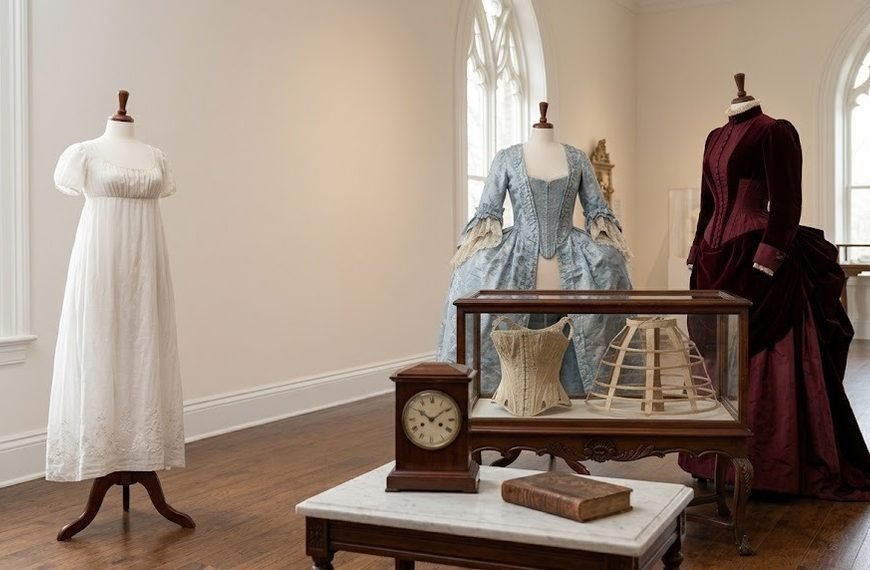
Georgian fashion changed considerably between 1714 and the late eighteenth century. Earlier fashionable gowns often used stays to support the torso and panniers to create a wide skirt. Some gowns including the robe à la française featured flowing back pleats and decorative fabrics.
Silk brocade embroidery ribbons and lace were popular in many elite outfits. However, elaborate court clothing did not represent everyone’s everyday wardrobe. Practical garments and less expensive fabrics were also important.
By the late eighteenth century fashionable silhouettes began changing. Lighter gowns and neoclassical influences gradually encouraged simpler shapes and higher waistlines. This transition started before the formal Regency so Georgian and Regency styles should not be treated as completely separate fashion periods.
What Made Regency Women’s Fashion Different?
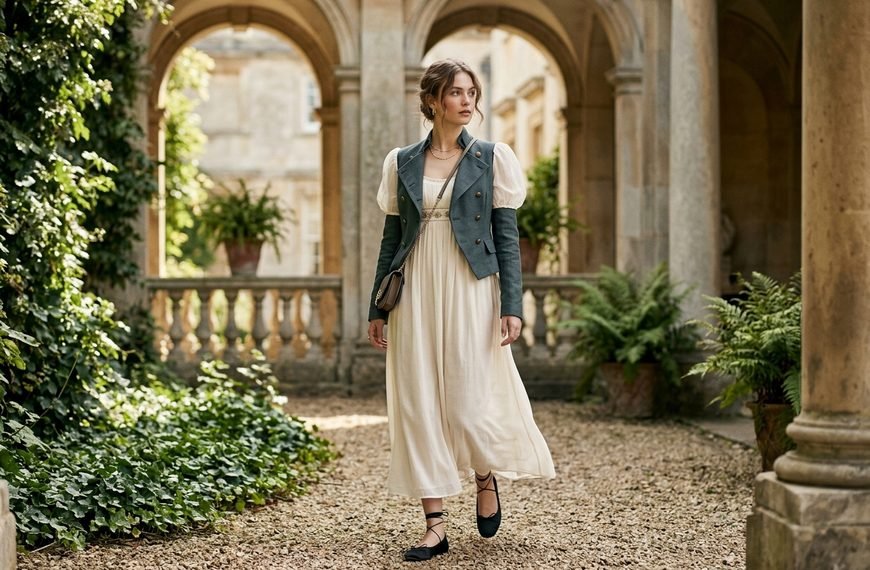
Regency fashion is best known for the Empire silhouette in which the waistline sits just below the bust and the skirt falls in soft folds. Neoclassical interest in ancient Greek and Roman art helped influence this style.
Empire waistlines and fabrics
Many fashionable Regency dresses used cotton muslin linen or silk. White and pale gowns became especially recognizable but women also wore colored and printed fabrics.
Early Regency dresses were often made from lightweight cotton muslin and featured simple neoclassical designs.
As the period progressed decoration became more elaborate with embroidery trimmings and richer fabrics appearing in fashionable gowns. White and pale shades remained recognizable but colored fabrics and different materials were also worn.
Sleeves and decorative details
Sleeves’ necklines, hems and trims changed throughout the Regency period. Some dresses were relatively simple while others featured embroidery patterned fabrics and decorative borders. Daywear, eveningwear and outdoor clothing also differed.
The National Gallery of Victoria’s Regency fashion collection provides useful examples of the period’s silhouettes and accessories.
How Did Georgian and Regency Men’s Fashion Compare?
Men’s clothing changed in cut and appearance as tailoring became increasingly important to fashionable dress.
Georgian men’s clothing
Many fashionable Georgian outfits included a coat waistcoat, knee breeches, stockings and buckle shoes. Formal garments could feature embroidery rich fabrics and decorative buttons although styles varied across the eighteenth century.
Regency men’s clothing
Regency menswear commonly featured tailored coats, fitted waistcoats, carefully arranged neckcloths and a more restrained appearance in many fashionable settings. Long trousers became increasingly common although knee breeches remained in formal and ceremonial clothing.
Regency men’s clothing often included tailored coats, fitted waistcoats, carefully arranged neckcloths and trousers or pantaloons. Dark well cut coats became associated with fashionable simplicity while breeches continued to appear in some formal settings.
The choice of clothing depended on the occasion, personal resources and changing fashion preferences.
Which Fabrics Colors and Patterns Were Popular?
Earlier Georgian elite clothing often featured silk damask brocade embroidery patterned cotton linen and wool. Expensive materials and detailed decoration could communicate wealth and social position.
Regency fashion is frequently associated with white muslin but colored cottons, printed fabrics, silks and wool garments were also worn. Clothing depended on the season, occasion, budget and personal taste.
Modern films often emphasize pale Regency gowns because they create a recognizable visual style. However surviving garments and contemporary fashion illustrations show a wider variety of colors and designs.
Fashion plates are useful historical evidence but they usually present fashionable ideals rather than the clothing of every social group.
How Did Hairstyles and Accessories Change?
Georgian hairstyles could include curls, ribbons, caps feathers and elaborate arrangements depending on the decade and occasion. Accessories included fans gloves, jewelry and decorative shoes.
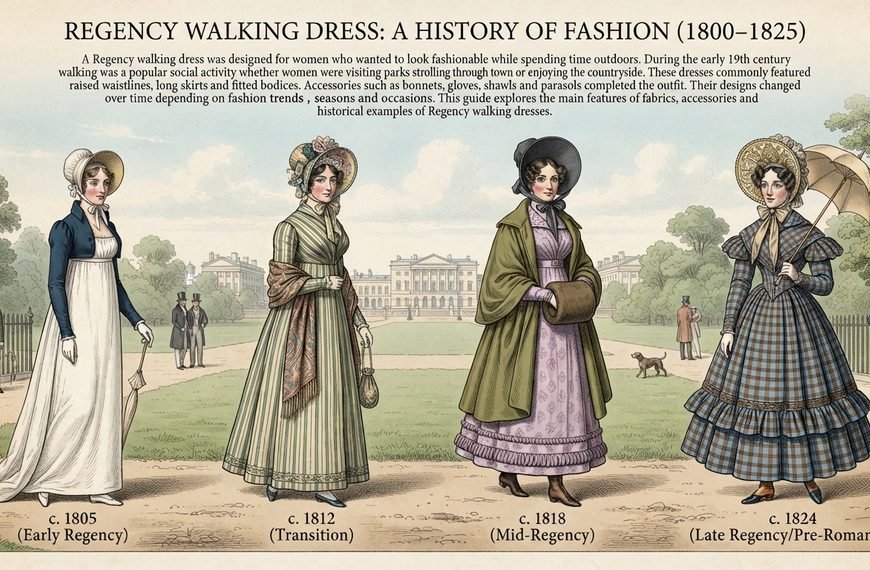
Regency outfits commonly featured bonnets, shawls, gloves and small bags called reticules. Short jackets known as spencers and longer outer garments called pelisses provided additional coverage. Hair was often arranged up sometimes with curls around the face.
Neither period had one universal style. Accessories and hairstyles changed over time and varied between formal occasions and everyday life.
What Historical Events Influenced Fashion?
Several cultural and political developments contributed to the transition from Georgian to Regency styles.
- Neoclassical influence: Interest in ancient Greek and Roman art encouraged the long raised waist silhouette associated with Regency dresses.
- The French Revolution: Beginning in 1789 it reshaped European political and cultural life and contributed to changing ideas about dress and luxury.
- War and trade: The French Revolutionary and Napoleonic Wars affected relationships and commerce although fashion information continued to circulate through publications and trade networks.
- Fashion publications: Periodicals such as La Belle Assemblée and Ackermann’s Repository of Arts helped readers follow new styles through illustrations.
Fashion evolved through several influences rather than one event or designer. Different styles also continued to coexist during the transition.
How Can You Identify Georgian vs Regency Fashion?
When examining a portrait museum garment or historical illustration compare several details rather than relying on a single feature.
- Check the waistline: Earlier Georgian gowns often used a natural waistline while fashionable Regency dresses frequently had a raised waist.
- Examine the skirt: Panniers and hoops created width in many earlier formal gowns; Regency skirts generally followed a more vertical line.
- Look at the fabric: Brocade and elaborate embroidery may suit some earlier formal styles while muslin is strongly associated with Regency fashion.
- Compare men’s clothing: Breeches trousers, coat cuts and neckwear can help narrow the date.
- Check accessories: Headwear outerwear shoes and bags provide additional clues.
- Verify the source: Dated museum objects and contemporary fashion plates are more reliable than undocumented modern costume images.
Common mistakes to avoid
- Assuming all Georgian dresses had wide skirts.
- Believing every Regency dress was white.
- Treating the Regency as separate from the broader Georgian era.
- Assuming modern film costumes are historically exact.
- Dating a garment based on only one feature.
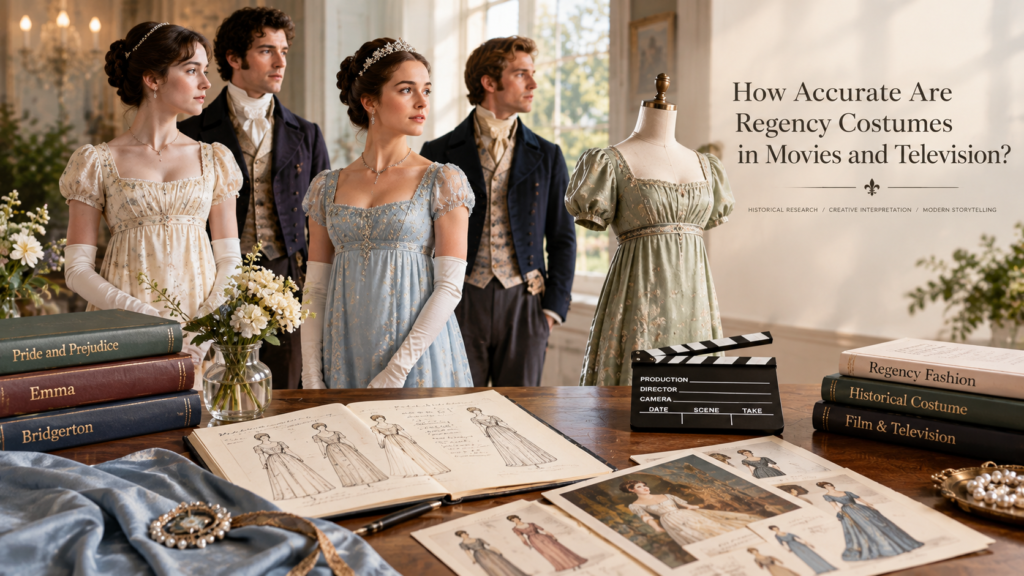
How Accurate Are Regency Costumes in Movies and Television?
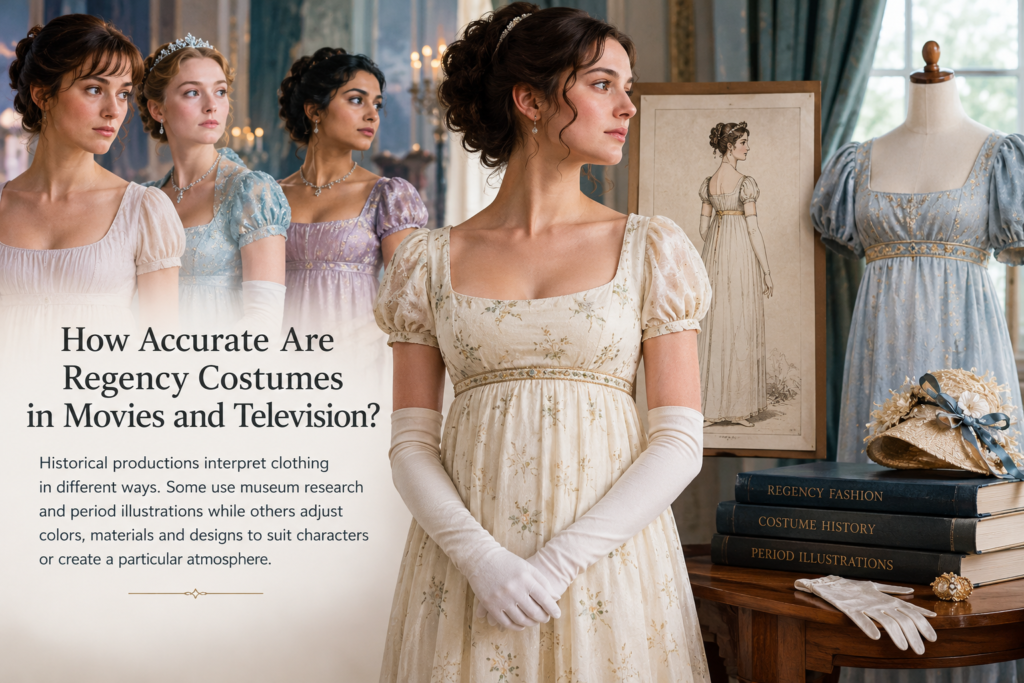
Historical productions interpret clothing in different ways. Some use museum research and period illustrations while others adjust colors, materials and designs to suit characters or create a particular atmosphere.
Historical dramas often use Regency inspired clothing but may change colors, decoration and garment details for visual storytelling. A high waistline can reflect the period’s fashionable silhouette while unusually elaborate trims or modern styling may be creative costume choices.
Comparing screen costumes with museum garments and period fashion illustrations can help readers identify these differences.
Conclusion
Georgian vs Regency fashion represents a gradual change within British clothing history. Many earlier Georgian styles emphasized structured bodices and wide skirts while fashionable Regency clothing became known for raised waistlines, flowing silhouettes and neoclassical influences.
Men’s tailoring and accessories evolved as well although formal clothing sometimes retained older traditions.
For more context explore EveryTalkin’s guides to Georgian fashion and Regency fashion. Comparing documented historical examples can help you understand these styles more accurately.
FAQs
Is Regency fashion part of the Georgian era?
Yes. The British Regency lasted from 1811 to 1820 and falls within the broader Georgian era conventionally dated from 1714 to 1830.
What is the biggest difference between Georgian and Regency dresses?
Many earlier Georgian gowns had structured bodices and wide skirts while fashionable Regency dresses typically featured raised waistlines and more vertical silhouettes.
Did Regency women stop wearing corsets?
No. Supportive undergarments continued to be worn although their shapes changed to suit the raised waistlines and silhouettes of Regency dresses.
Was Jane Austen’s clothing Georgian or Regency?
Both terms can apply. Jane Austen lived from 1775 to 1817 spanning the transition from late Georgian styles to Regency fashion. The appropriate description depends on the date and context of the clothing.
Were all Regency dresses white?
No. White and pale muslin gowns were popular but colored and printed fabrics silk cotton and wool were also used.
Can one clothing detail confirm a garment’s date?
Usually not. The most reliable identification considers the silhouette construction fabrics accessories and historical documentation together.

 By

 By