

A morning can feel rushed when you wake up without a clear plan. Checking your phone, delaying essential tasks and deciding what to do first can make the day harder to organise.
A simple morning routine helps you create a more structured start by giving everyday activities a clear order.
It does not require waking up extremely early or following a strict schedule. Instead choose a few healthy habits that support your responsibilities, personal goals and daily needs.
What Is a Morning Routine?
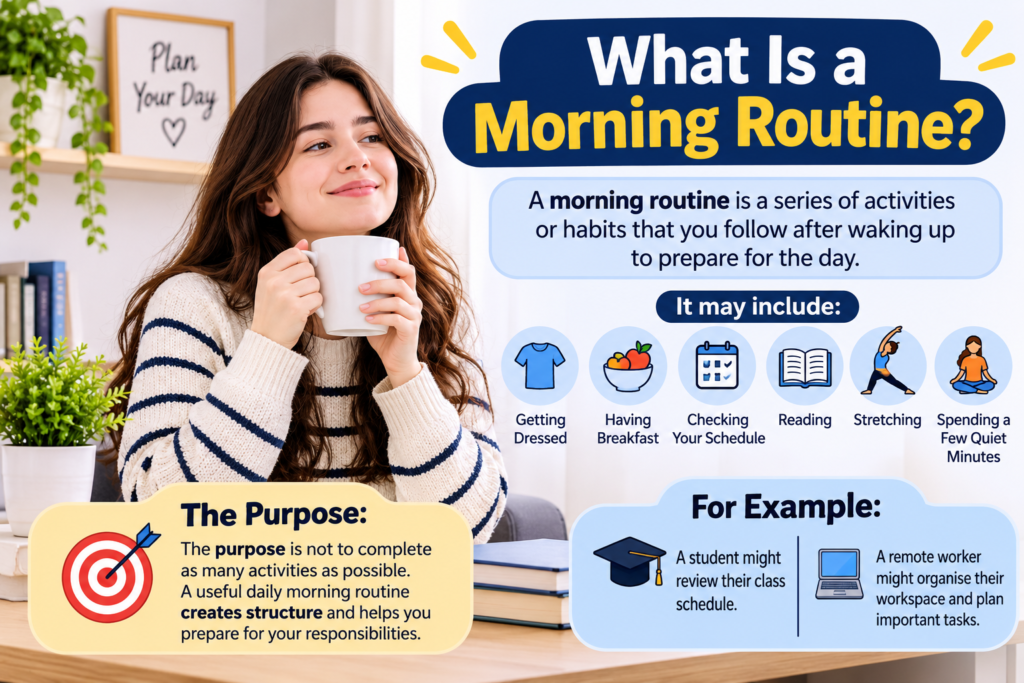
A morning routine is a series of activities or habits that you follow after waking up to prepare for the day. It may include getting dressed, having breakfast, checking your schedule, reading, stretching or spending a few quiet minutes.
The purpose is not to complete as many activities as possible. A useful daily morning routine creates structure and helps you prepare for your responsibilities.
For example a student might review their class schedule while a remote worker might organise their workspace and plan important tasks.
Why Is Having a Morning Routine Important?
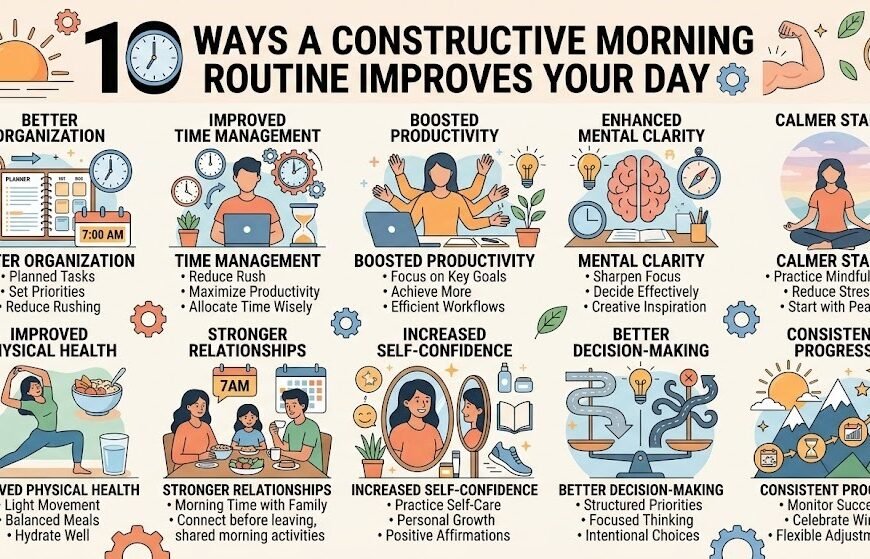
A consistent morning routine can make everyday activities easier to organise and help you focus on important responsibilities. It can improve organisation and time management by giving your morning a clear structure.
Simple habits such as eating breakfast, drinking water and including comfortable movement can support everyday wellbeing.
A morning routine can also create time for personal development through reading, journaling or reviewing goals. Following a familiar sequence may make the transition from waking up to daily responsibilities easier.
However your routine should not reduce the sleep you need or create unnecessary pressure.
What Are the Most Effective Morning Habits?
The best morning habits are those that fit your schedule and support your needs. You do not need to follow every habit to create a healthy morning routine.
Wake Up at a Consistent Time
Try to maintain a reasonably consistent wakeup time that suits your responsibilities. A regular sleep schedule can help create a predictable daily pattern.
However getting enough sleep is more important than following an extremely early alarm. The CDC recommends 8–10 hours for teenagers aged 13–17 and at least 7 hours for adults aged 18–60.
Avoid Checking Your Phone Immediately
Opening social media or checking nonurgent notifications immediately after waking can distract you from your morning priorities. Consider completing essential activities before browsing apps or responding to messages.
Drink Water and Have Breakfast
Drinking water after waking can help you stay hydrated particularly if you feel thirsty. Breakfast can also be part of your routine depending on your appetite and daily needs. Choose convenient foods that suit your preferences.
Get Natural Daylight
Open your curtains or spend a little time outside when possible. Sitting near a window during breakfast or taking a short walk can make daylight part of your morning.
Include Morning Movement
Gentle stretching, walking or yoga can help you begin the day with some movement. Regular physical activity supports overall wellbeing but your morning routine does not need an intense workout. The World Health Organization provides guidance on the importance of regular physical activity.
Practise Mindfulness
Spend a few quiet minutes meditating, praying, journaling or reflecting on your day. Choose an activity that helps you collect your thoughts without turning it into another demanding task.
Review Your Daily Priorities
Identify two or three important tasks before starting work or study. For example you might complete an assignment, attend a meeting or finish an important project section. This gives your day a clearer direction.
How to Create a Morning Routine That Works for You?
Building a successful morning routine starts with understanding your current habits and responsibilities. Notice what makes your mornings difficult such as spending too much time looking for belongings or struggling to leave home on time.
Decide what you want to improve whether it is time management preparation or reducing phone distractions. Choose a few activities that directly support your goals instead of adding too many habits at once.
Consider your school work and personal responsibilities before deciding how long your routine should be. Preparing clothes bags, workspaces or calendars the night before can also reduce morning decisions.
Finally, review your routine regularly. Keep the activities that help and change those that feel unnecessary or difficult to maintain.
What Is a Good 30 Minute Morning Routine?
A 30minute morning routine provides time for several useful activities without taking up too much of your day.
| Time | Activity |
| 0–5 minutes | Wake up freshen up and open the curtains |
| 5–10 minutes | Drink water and get ready |
| 10–15 minutes | Stretch or take a short walk |
| 15–20 minutes | Have breakfast |
| 20–25 minutes | Review daily priorities |
| 25–30 minutes | Organise essential belongings |
You can change the order depending on your preferences and responsibilities. This is an example of a strict schedule.
What Is a Simple 15 Minute Morning Routine?
If you have limited time a short morning routine can still help you organise your day.
| Time | Activity |
| 0–3 minutes | Wake up and freshen up |
| 3–6 minutes | Drink water and open the curtains |
| 6–9 minutes | Stretch or move comfortably |
| 9–12 minutes | Review your main priority |
| 12–15 minutes | Organise your essentials |
Focus on essential activities and leave optional tasks for later.
Morning Routine Examples for Different Lifestyles
Different people have different responsibilities so their routines should reflect their daily schedules.
Morning Routine for Students
Students can prepare for classes by waking up with enough time to get ready, having breakfast, checking their class timetable and packing books and essential supplies. Reviewing an important assignment can also help them prepare for the day.
Students can also explore personal development for students to learn about building useful academic and life skills.
Morning Routine for Professionals
Professionals can create a smoother start by getting ready, having breakfast, checking meetings and identifying their most important work task.
Morning Routine for Remote Workers
Remote workers can benefit from getting dressed, organizing their workspace and reviewing their daily schedule. Setting a clear starting time can also help separate personal activities from work.
Morning Routine for Busy People
People with limited time should focus on essential activities. Preparing belongings the night before and choosing one or two useful morning habits can make their schedules easier to manage.
How Can You Make Your Morning Routine Consistent?
Consistency becomes easier when your routine is realistic. Start with one or two habits instead of changing everything at once. Connect activities naturally such as reviewing your schedule after breakfast or preparing your bag before bed.
Keep essential belongings in convenient places and use a simple checklist if it helps you monitor your progress.Remember to adjust your routine when your responsibilities or schedule change.
You do not need to follow the same routine perfectly every day; the important thing is to return to useful habits when possible.
What Should You Do When Your Morning Does Not Go as Planned?
Unexpected responsibilities or a late start can disrupt even a well planned morning. Instead of trying to complete every missed activity, focus on what matters most.
Get ready to organise essential belongings and prioritise your immediate responsibilities. Optional activities such as reading or journaling can be moved to another time. Having a shorter backup routine can also help you manage particularly busy mornings.
Common Morning Routine Mistakes to Avoid
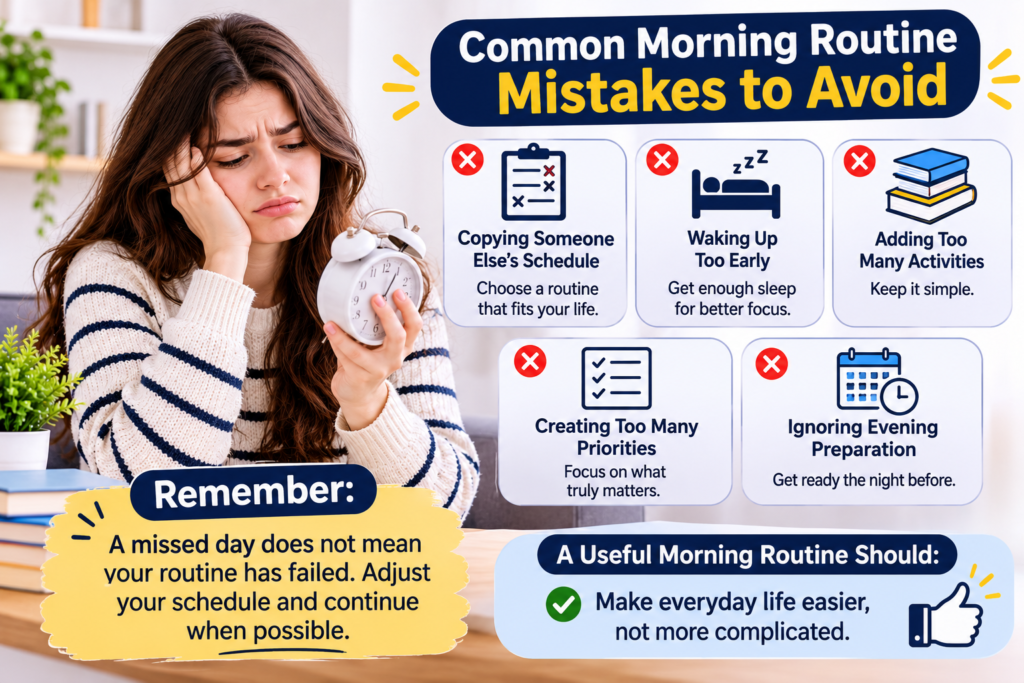
When creating a morning routine avoid copying someone else’s schedule without considering your own responsibilities. Waking up too early, sacrificing adequate sleep or adding too many activities can make a routine difficult to maintain. It is also helpful to avoid creating too many daily priorities or ignoring evening preparation.
A missed day does not mean your routine has failed. Adjust your schedule and continue when possible. A useful morning routine should make everyday life easier, not more complicated.
Conclusion
A good morning routine is about creating a practical structure that supports your everyday responsibilities and personal goals. You do not need dozens of habits or an extremely early wakeup time.
Start with a few useful activities, choose a schedule that fits your life and make adjustments when necessary.
Whether you have 15 or 30 minutes a realistic morning routine can help you begin the day with greater organisation.
FAQs
1 What Is the Best Morning Routine?
The best morning routine is one that supports your responsibilities, wellbeing and personal priorities. It may include getting ready, having breakfast, reviewing your schedule and making time for a useful activity.
2 How Long Should a Morning Routine Be?
A morning routine can take 15, 30 or 60 minutes depending on your schedule. Choose enough time for essential activities without reducing the sleep you need.
3 Is a 15Minute Morning Routine Enough?
Yes. A 15minute routine can provide a more organised start. Focus on basic activities such as getting ready drinking water and reviewing your priorities.
4 Do You Need to Wake Up at 5 AM to Have a Productive Morning?
No. Waking up at 5 AM is not necessary for productivity. Choose a wakeup time that suits your responsibilities and allows you to get adequate sleep.
5 What Are the Five Best Morning Habits?
Five useful habits include waking up consistently, drinking water, getting natural daylight including comfortable movement and reviewing daily priorities.
6 How Can You Stay Consistent With a Morning Routine?
Start with a few manageable habits, prepare important items the night before and adjust your routine when necessary. If you miss a day return to your usual activities when possible.

 By



 By