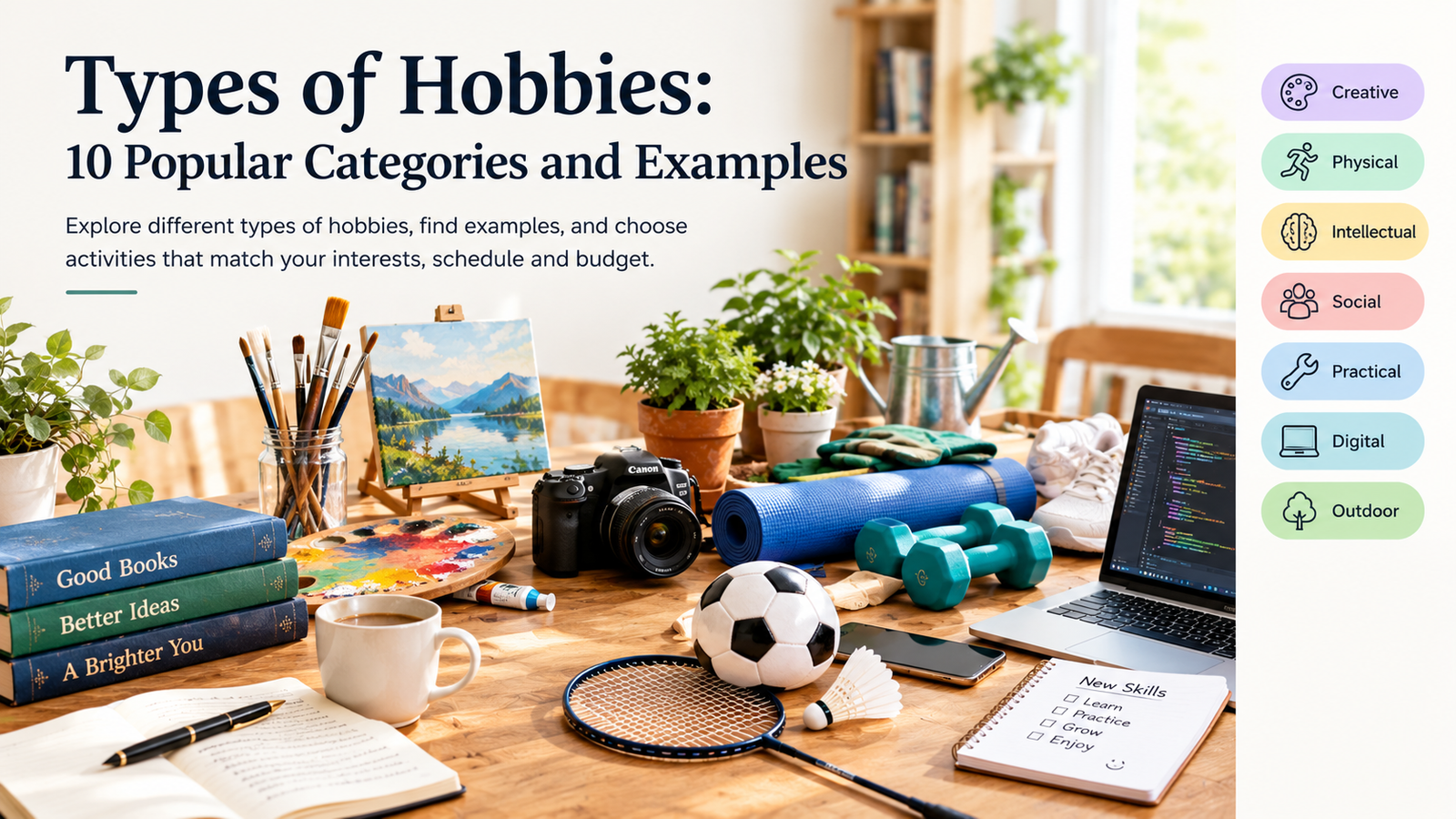

Hobbies include activities such as reading, painting, gardening, playing sports and learning new skills. Exploring different types of hobbies can help you find activities that match your interests, schedule and budget.
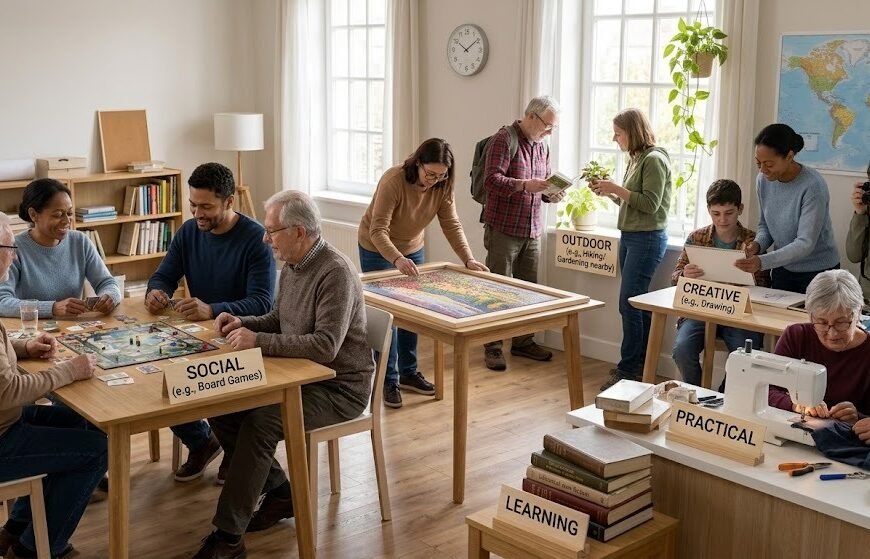
Some hobbies focus on creativity while others involve physical movement, learning social interaction or practical skills. Many overlap for example photography can be both creative and outdoor based.
This guide explains 10 common hobby categories, provides examples and shares tips for choosing the right activity.
What Are the Different Types of Hobbies?
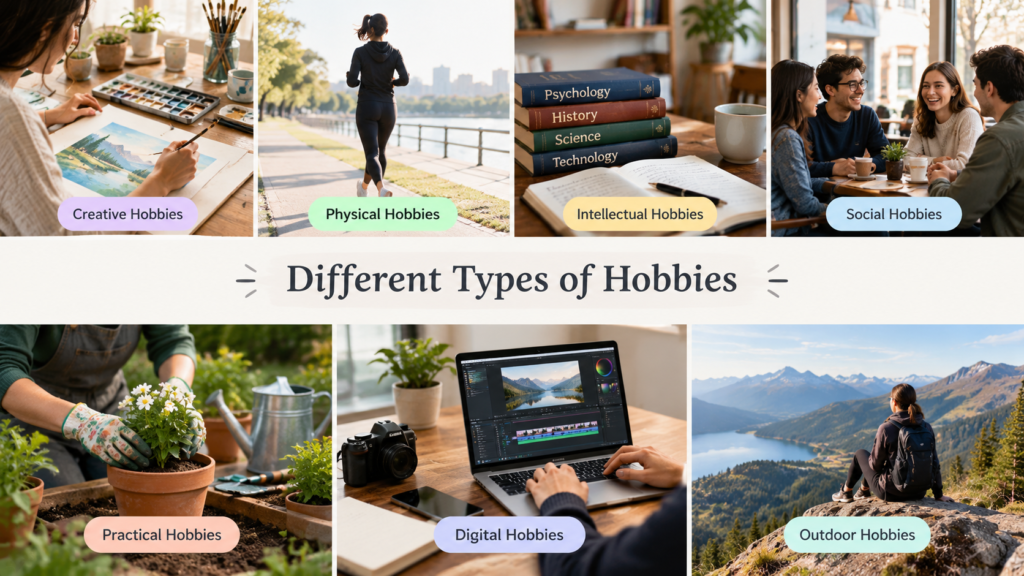
Types of hobbies are categories used to organize leisure activities according to their purpose or style. Common categories include creative physical intellectual social practical digital and outdoor hobbies.
These categories are flexible rather than strict rules. Someone who enjoys gardening may also enjoy photography while a music enthusiast might prefer playing an instrument or studying music history.
Creative Hobbies
Creative hobbies involve making things or expressing ideas through art design and performance.
Examples include:
- Drawing and painting
- Photography and creative writing
- Knitting crochet and embroidery
- Calligraphy and crafts
- Playing musical instruments
- Digital illustration
You can begin with simple projects such as writing short stories or taking photographs with your phone. Expensive equipment and professional skills are not necessary.
Best for: People who enjoy self expression design and making things.
2. Physical and Sports Hobbies
Physical hobbies involve movement coordination and recreational exercise. They can be individual or team based.
Examples include walking, cycling, swimming , dancing, yoga, badminton, football and tennis.
Choose an activity that suits your interests, abilities and available facilities. Some require little equipment while others involve club fees or scheduled sessions.
Best for: People who enjoy movement, practising physical skills or playing with others.
Intellectual and Learning Hobbies
Intellectual hobbies involve learning research and problem solving.
Examples include:
- Reading fiction and nonfiction
- Learning a language
- Studying history or science
- Solving puzzles and crosswords
- Playing chess
- Exploring astronomy
- Listening to educational podcasts
Many can be started with books, free online resources or short practice sessions.
Best for: People who enjoy discovering information and developing knowledge.
Social and Community Hobbies
Social hobbies involve sharing activities and interests with others.
Examples include joining a book club playing board games, participating in team sports, attending cooking classes joining language groups and taking part in suitable community volunteering.
You can start with a small group or an activity shared with a friend or family member.
Best for: People who enjoy conversation cooperation and shared experiences.
Outdoor and Nature Hobbies
Outdoor hobbies involve exploring natural environments, observing wildlife or spending time outside.
Examples include:
- Gardening and growing herbs
- Birdwatching
- Hiking on suitable trails
- Nature photography
- Exploring local parks
- Plant identification
- Keeping a nature journal
Consider local weather access equipment and safety before choosing an outdoor activity.
Best for: People who enjoy nature, plants and exploration.
Indoor Hobbies
Indoor hobbies can be enjoyed at home or in indoor community spaces.
Examples include reading, journaling, drawing , cooking puzzles, board games, knitting and indoor gardening.
Some activities are independent while others can be shared with family or friends. Choose one that fits your available space and routine.
Best for: People who prefer home based or weather independent activities.
Practical and DIY Hobbies
Practical hobbies involve making, repairing or improving useful items.
Examples include:
- Cooking and baking
- Sewing and mending clothes
- Furniture restoration
- Simple craft projects
- Home organization
- Basic woodworking
Start with a manageable project suited to your current skills. For activities involving tools or repairs follow appropriate safety guidance.
Best for: People who enjoy hands on tasks and solving practical problems.
Digital and Technology Hobbies
Digital hobbies use technology and software for creativity learning or personal projects.
Examples include graphic design digital illustration video editing website building creative coding blogging and digital photography.
Beginners can start by designing a poster, building a basic webpage or editing a short video. Use suitable privacy and online safety practices when publishing content.
Best for: People interested in technology and digital creativity.
Collecting and Organizing Hobbies
Collecting hobbies involve finding, arranging , researching or documenting items of interest.
Examples include collecting stamps, coins, postcards and books. Other options include organizing photographs, recording family history or cataloguing books you have read.
You can start with items you already own. Set a budget and storage limit if collecting involves purchases.
Best for: People who enjoy research organization and attention to detail.
Food and Cooking Hobbies
Food related hobbies involve preparing, decorating and exploring different foods.
Examples include:
- Trying new recipes
- Baking bread or cookies
- Decorating cakes
- Making homemade snacks
- Exploring traditional dishes
- Learning food photography
Start with a simple recipe and ingredients you already have. Follow food safety guidance and buy specialist equipment only when needed.
Best for: People who enjoy experimenting with recipes and developing practical skills.
How Do Different Types of Hobbies Compare?
| Hobby Type | Main Focus | Examples | Typical Starting Cost |
| Creative | Expression | Drawing writing | Free to moderate |
| Physical | Movement | Walking dancing | Free to moderate |
| Intellectual | Learning | Reading chess | Free to low |
| Social | Shared activities | Book clubs board games | Free to moderate |
| Outdoor | Nature | Gardening birdwatching | Free to moderate |
| Indoor | Home based leisure | Puzzles crafts | Free to moderate |
| Practical | Hands on skills | Cooking sewing | Low to moderate |
| Digital | Technology | Coding design | Free to moderate |
| Collecting | Research and organization | Stamps books | Free to higher cost |
| Food related | Cooking | Baking recipe development | Low to moderate |
Costs depend on the activity and resources available. Categories can also overlap: nature photography is both creative and outdoor based while cooking can be practical, creative and social.
How Can You Choose the Right Type of Hobby?
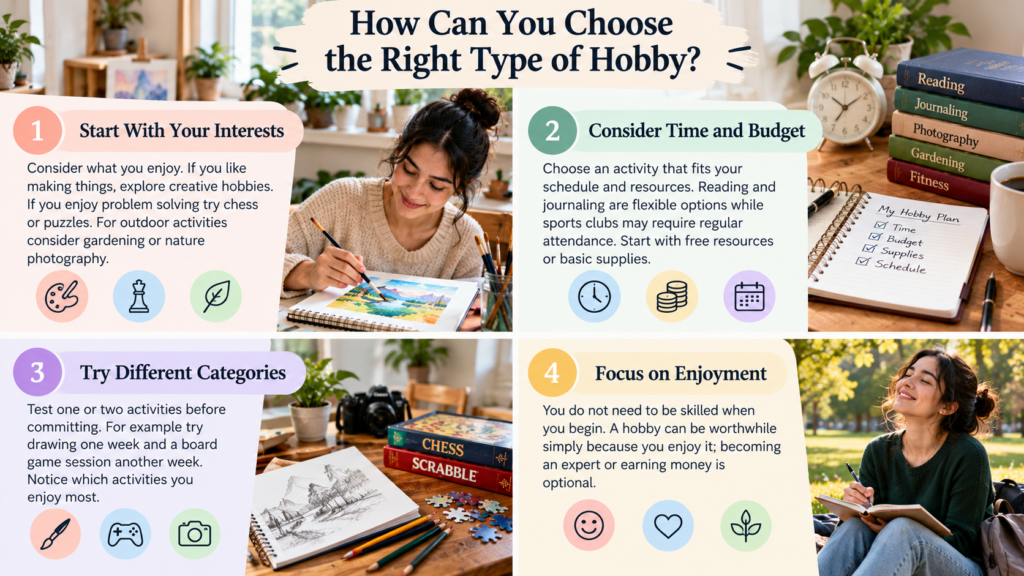
Start With Your Interests
Consider what you enjoy. If you like making things, explore creative hobbies. If you enjoy problem solving try chess or puzzles. For outdoor activities consider gardening or nature photography.
Consider Time and Budget
Choose an activity that fits your schedule and resources. Reading and journaling are flexible options while sports clubs may require regular attendance. Start with free resources or basic supplies.
Try Different Categories
Test one or two activities before committing. For example try drawing one week and a board game session another week. Notice which activities you enjoy most.
Focus on Enjoyment
You do not need to be skilled when you begin. A hobby can be worthwhile simply because you enjoy it; becoming an expert or earning money is optional.
Conclusion
The different types of hobbies offer many ways to explore interests and enjoy your free time. From creative arts and sports to learning cooking and collecting there are options for different budgets and lifestyles.
Start with one activity that interests you, use available resources and give yourself time to explore. You can also read our guide to different hobbies for more ideas and help choosing an activity.
FAQs
What are the main types of hobbies?
Common categories include creative physical intellectual social outdoor indoor practical digital collecting and food related hobbies. Some activities fit into several categories.
What is the difference between indoor and outdoor hobbies?
Indoor hobbies include reading, drawing and cooking while outdoor hobbies include gardening, hiking and birdwatching. Outdoor activities may depend more on weather and location.
Which hobbies are suitable for beginners?
Reading, journaling, drawing, walking , simple cooking and puzzles can be approachable starting points. Choose an activity that fits your interests and resources.
Can one hobby belong to multiple categories?
Yes. Photography can be creative and outdoor based while cooking can be practical, educational and social.
Which hobbies help develop useful skills?
Writing, cooking , coding , photography, language learning and team activities offer opportunities to practise different skills. Results depend on the activity and your participation.
Do hobbies need to be productive or profitable?
No. Hobbies can simply be enjoyable ways to spend free time. Developing skills or earning money may be additional benefits but neither is required.

 By




 By