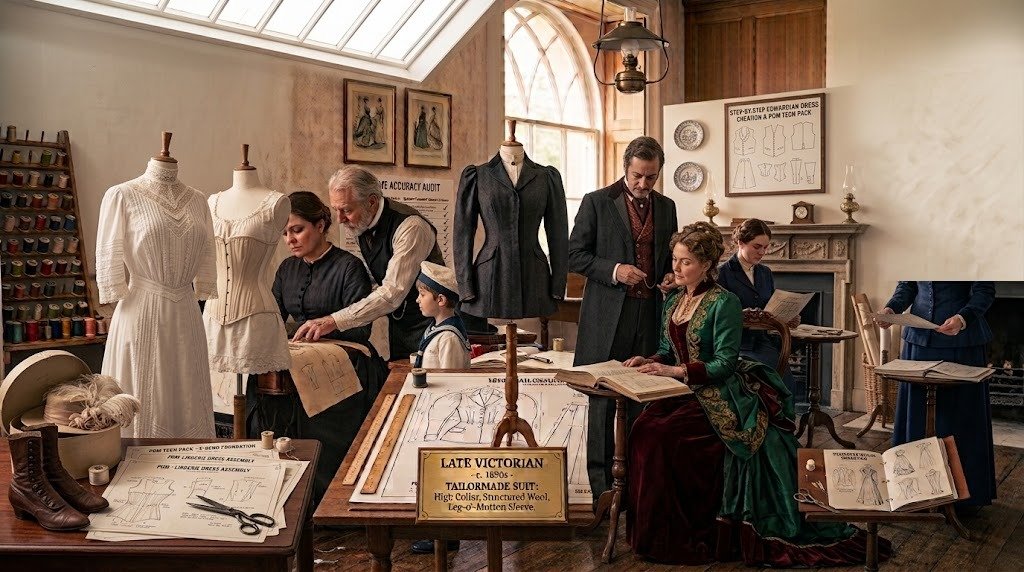

Edwardian fashion developed during a period of social and cultural change in the early twentieth century. Associated with the reign of King Edward VII (1901–1910) this era featured elegant dresses, tailored suits, decorative hats and changing silhouettes.
also varied by social class occupation and occasion making everyday wear just as important as formal fashion.
What Was Edwardian Fashion?
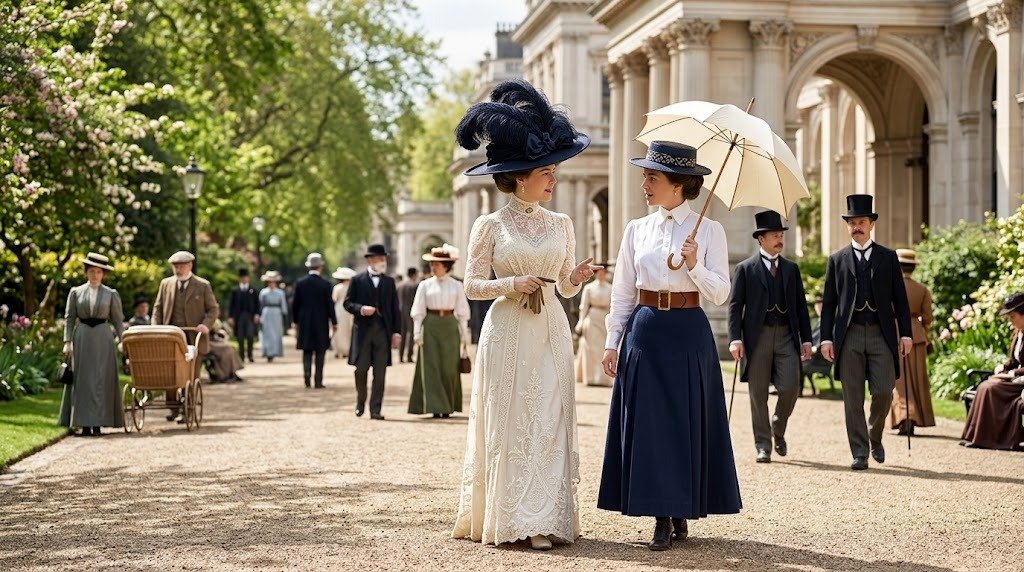
Edwardian fashion refers to clothing styles popular around the beginning of the twentieth century particularly in Britain, France and the United States. Women’s outfits often featured fitted skirts, bloused bodices, high daytime necklines and decorative details. Men wore tailored suits and formal coats while children’s clothing adapted adult styles for younger wearers.
Fashion changed throughout the decade. Early styles retained some Victorian influences while later designs gradually became more streamlined.
What Were the Main Features of Edwardian Fashion?
Edwardian clothing combined structured shapes with decorative details. Common features included:
- S bend silhouette: A distinctive shape associated with early Edwardian women’s corsetry.
- Bloused bodices: Bodices with fullness around the chest and waist.
- Long skirts: Skirts varied in fullness and shape throughout the decade.
- Decorative fabrics: Lace embroidery pleats and tucks added detail.
- Large hats: Fashionable hats often featured ribbons, flowers and feathers.
- Tailored suits: Popular for men’s formalwear and women’s daytime outfits.
- Occasion specific clothing: Daywear, eveningwear, sportswear and workwear served different needs.
Not every outfit included these features. Clothing depended on personal circumstances, available resources and the activity.
What Did Women Wear During the Edwardian Era?
Edwardian women’s fashion included day dresses, evening gowns shirtwaists tea gowns and tailored suits.
Day Dresses and Shirtwaists
Day dresses commonly featured long sleeves, high necklines, lace and decorative collars. Shirtwaists worn with separate skirts offered a practical alternative because women could combine different pieces to create several outfits.
Evening Gowns
Evening gowns were generally more decorative than daytime clothing. Silk satin chiffon lace and embellishments appeared in fashionable examples with designs varying according to the occasion.
Tea Gowns and Tailored Suits
Tea gowns offered a relatively relaxed option for informal domestic and social settings. Tailored suits combined fitted jackets with matching or coordinated skirts and were useful for walking travel and other daytime activities.
These different garments show that Edwardian women’s fashion included both elaborate formalwear and practical clothing.
What Was the Edwardian S Bend Silhouette?
The S bend silhouette was a recognizable feature of early Edwardian women’s fashion. A straight front corset helped create a curved outline with the bust projecting forward and the hips positioned farther back. Full bodices, petticoats and skirt construction also influenced the final shape.
Although this silhouette became strongly associated with the period, not every woman dressed this way. Clothing choices differed according to income activity, personal preference and changing fashion trends.
How Did Edwardian Fashion Change Between 1900 and 1910?
Edwardian fashion evolved throughout the decade rather than remaining fixed.
| Period | Main fashion characteristics |
| Around 1900–1903 | Pronounced S bend silhouettes and full bodices |
| Around 1904–1906 | Changing skirt shapes and sleeve proportions |
| Around 1907–1909 | Gradually more streamlined silhouettes |
| Early 1910s | New shapes and proportions associated with emerging 1910s fashion |
These dates are approximate. Garments should be compared with dated photographs, fashion illustrations or museum collections for more accurate identification.
What Did Edwardian Men Wear?
Men’s fashion centered on tailored clothing with different outfits for business formal occasions and leisure.
Suits and Formalwear
Three piece suits generally included a jacket waistcoat and trousers often worn with a shirt collar and tie. Morning dress was used for formal daytime occasions while tailcoats remained important for highly formal evening events.
The dinner jacket was also gaining acceptance as an alternative for some evening occasions.
Sportswear and Leisure Clothing
Sports and outdoor activities influenced men’s clothing. Sweaters, knickerbockers and specialized garments were worn for activities such as cycling, golf and tennis. These outfits prioritized the needs of particular activities rather than following formal dress conventions.
What Did Edwardian Children Wear?
Children’s clothing reflected adult fashion but also considered age comfort and practical needs. Girls commonly wore dresses with collars, ribbons or lace while simpler garments were suitable for everyday activities.
Boys wore items such as jackets, tunics, knickerbockers and sailor suits. Clothing varied significantly by family income and occasion so elaborate outfits should not be treated as typical of every child.
Which Accessories Completed an Edwardian Outfit?
Accessories helped define the occasion and complete the outfit.
Hats: Large decorated hats were popular in fashionable women’s clothing while simpler styles suited other activities.
Gloves: Gloves accompanied many formal daytime outfits and evening garments.
Parasols and bags: Parasols were outdoor accessories while bags and small personal items varied by use.
Shoes and boots: Footwear differed for formal events walking work and sports.
Jewelry: Brooches necklaces and earrings added decorative details according to the outfit and occasion.
For historical accuracy compare accessories with dated photographs and museum objects rather than relying only on modern vintage inspired designs.
How Did Social Class Affect Edwardian Clothing?
Income and occupation influenced the clothing people could afford and maintain. Wealthier households might have separate outfits for visiting formal events, travel and leisure. Many working people relied on smaller wardrobes and garments that could be repaired or worn repeatedly.
The growth of garment production and retail made some clothing more accessible but differences in quality variety and fit remained. Fashion illustrations often showed fashionable examples rather than the full range of everyday clothing.
What Was the Difference Between Victorian and Edwardian Fashion?
Victorian fashion covers Queen Victoria’s reign from 1837 to 1901 while Edwardian fashion is commonly associated with the years around 1901–1910.
| Feature | Victorian Fashion | Edwardian Fashion |
| Period | 1837–1901 | Around 1901–1910 |
| Women’s silhouettes | Varied widely including crinolines and bustles | Early styles often featured the S bend silhouette |
| Skirts | Changed significantly by decade | Long skirts with changing fullness and increasingly streamlined shapes |
| Men’s clothing | Tailored coats suits and formalwear | Tailored suits remained central alongside evolving leisurewear |
The transition was gradual and some Victorian styles continued into the early twentieth century. Garment construction and historical evidence are more reliable than dates alone.
For more historical fashion comparisons explore 1920s fashion.
How Did Edwardian Fashion Lead Toward 1910s Styles?
By the end of the 1900s fashionable silhouettes were becoming more streamlined. The exaggerated proportions associated with the early S bend shape gradually softened and skirt and bodice designs changed.
The 1910s introduced further developments so clothing from that decade should not automatically be classified as Edwardian. Examining the silhouette construction and date helps distinguish the styles.
How Can You Create a Historically Accurate Edwardian Outfit?
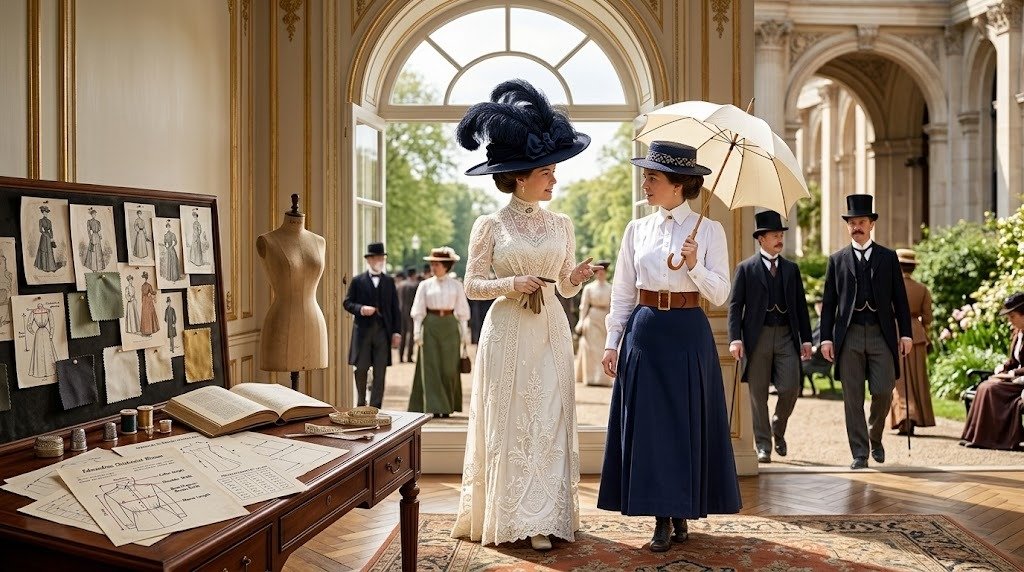
Start by choosing a specific year and occasion. A formal gown from the early 1900s requires different clothing and accessories from a practical walking outfit.
- Choose a date or narrow period.
- Decide whether you need daywear, eveningwear, sportswear or workwear.
- Check the silhouette sleeves, bodice and skirt shape.
- Select suitable hats, shoes, gloves and other accessories.
- Compare your choices with dated photographs and museum collections.
Avoid mixing Edwardian clothing with later styles such as 1920s flapper dresses if historical accuracy is your goal.
Conclusion
Edwardian fashion combined tailored clothing, decorative details and changing silhouettes. Women’s dresses and corsetry are well known features but men’s suits, children’s clothing, sportswear and accessories also help explain the period.
To understand a particular style identify its approximate date and purpose then compare it with reliable historical references. This helps distinguish authentic Edwardian clothing from later trends and modern vintage inspired outfits.
FAQs
What years does Edwardian fashion cover?
Edwardian fashion is commonly associated with King Edward VII’s reign from 1901 to 1910 although the term may be used more broadly for styles around the turn of the century.
What is the most recognizable feature of Edwardian women’s fashion?
The S bend silhouette is one of the best known features of early Edwardian women’s fashion. Bloused bodices, long skirts and large hats are also associated with the period.
Did Edwardian women wear corsets?
Yes. Corsets remained part of fashionable women’s clothing and the straight front corset was associated with the S bend silhouette. However clothing practices varied among women.
What did Edwardian men wear every day?
Many men wore suits with jackets, waistcoats, trousers, shirts and ties. Workwear and sportswear differed according to occupation and activity.
How can I identify an Edwardian garment?
Examine its silhouette construction fabric fastenings and any available provenance. Compare it with dated historical photographs and museum objects rather than relying on one feature alone.

 By
By

 By
By