
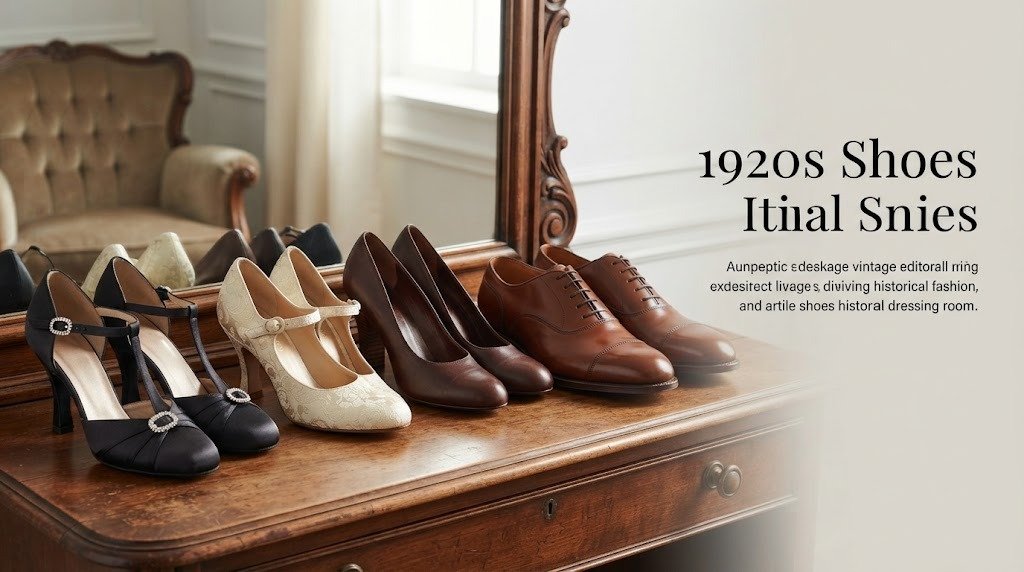

1920s shoes reflected the changing fashion and lifestyle of the decade. As women’s hemlines became shorter shoes became a more visible part of an outfit.
Popular styles included strap heels, Mary Janes pumps and lace up Oxfords while men commonly wore leather Oxfords and other dress shoes.
However there was no single shoe that everyone wore. Shoes were different by event location and personal taste.
What Did 1920s Shoes Look Like?
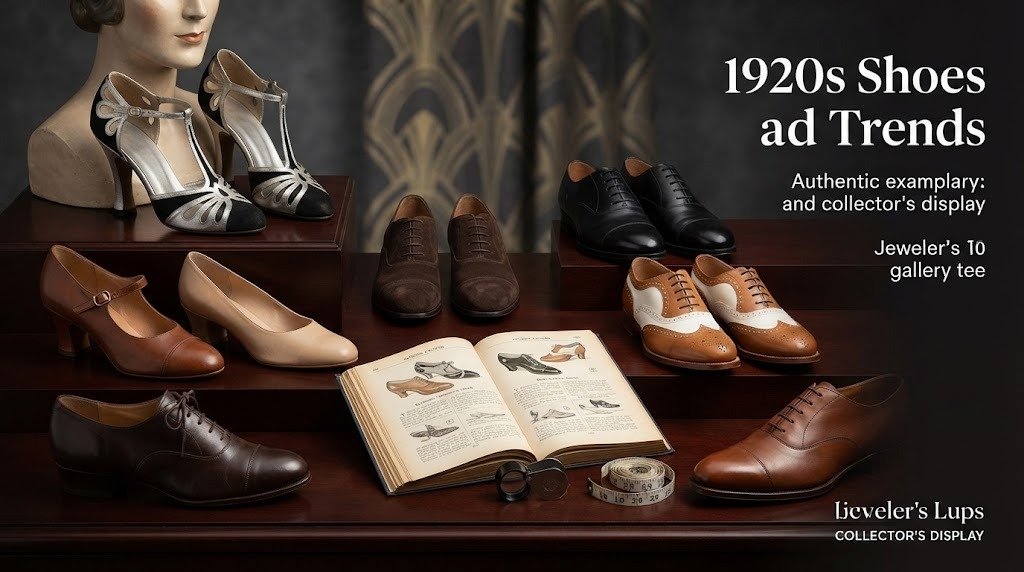
1920s shoes had useful designs . Women’s shoes included strap shoes, closed toe pumps, Mary Janes straps and lace up styles. Men commonly wore Oxfords and other leather shoes.
Some common features included:
- Straps: Button straps and T-shaped straps were popular on women’s shoes.
- Heels: Shoes came with different types of heels including Cuban and Louis heels.
- Types of material : Leather was common while satin velvet and brocade were used in dress shoes.
- Useful styles: Simple lace up shoes were good for everyday Things to do .
The type of shoe often depended on how it was going to be used. Shoes for dancing or Dressy events could look very different from shoes worn for walking work or sports.
Popular Women’s Shoes in the 1920s
Women’s shoes were more different than the common flapper image shows. Different shoes were worn for different outfits and events .
TStrap Heels
strap heels are closely associated with 1920s fashion. A strap runs down the center of the foot and joins another strap making a T-shaped design
These shoes were good forformal outfitsand dancing because the straps helped keep the shoe secure. Some had buttons, buckles, small openings or designs while others were simple.
Mary Jane Shoes
Mary Jane shoes usually have a strap over the top of the foot . They could have different toe shapes and heel heights.
The style existed before the 1920s but different versions became popular during the decade. Some designs also had Mary Jane and strap features.
ClosedToe Pumps
Closedtoe pumps were another common choice. They could be simple enough for everyday clothing or more Fancy forDressy events .
Satin velvet brocade and other fancy types of fabric/shoe were sometimes used for evening shoes. This shows that not every fashionable woman wore highly decorated per style shoes.
LaceUp Shoes and Oxfords
Laceup shoes and Oxfords offered a more Useful choice. Women’s Oxfords could be worn with daytime clothing wellfitted outfits and for walking.
Some included leather designs, fancy holes or contrasting panels. Their simple design made them good for everyday wear.
Evening Shoes
Evening shoes could be more fancy than everyday . Satin velvet brocade buttons buckles and other designs were used to create a dressier look . These shoes were made to go with formal clothes and were not always suitable for everyday use.
What Heels Were Popular in the 1920s?
1920s shoes had different types of heels rather than one standard style . Cuban heels were sturdy and slightly tapered. They were used on different types of shoes and could provide a Useful but stylish look.
Louis heels had a curved shape and were often associated with dressier shoes . They continued to appear during the 1920s although the heel shape alone cannot prove that a shoe is from the decade.
Lower heels and flatter shoes were also worn especially for Useful Things to do . When studying an old shoe it is better to look at its wholeHow it is made instead of Dependingon one feature.
What Materials Were Used in 1920s Shoes?
Leather was widely used for everyday shoes including Oxfords pumps and strap shoes. Dark leather was a Useful choice although other colors were also available.
Dress shoes could use satin velvet or brocade to create a more stylish look . Some shoes also had button buckles Fancy stitching different colored parts or other designs
Not every 1920s shoe was bright or heavily decorated.Simple shoes was also an important part of everyday clothing
What Shoes Did Men Wear in the 1920s?
Men’s shoes included Oxford’s Dressy leather shoes and Useful styles for different Things to do . Oxford shoes were common with tailored clothing. Black and dark leather versions worked well with suits while other designs could be less dressy .
Broguestyle shoes had fancy holes or patterns in the leather. Their level of decoration was different and they were not limited to one type of event n. Men’s shoes depended on the clothing and activity. Dressy eveningwear business clothing and Freetime activities outfits could require different shoes.
Sports and Leisure Shoes
The 1920s also saw growing interest in sports and Freetime activities . Useful shoes including canvas tennis shoes offered an alternative to Dressy leather shoes .
This variety is important because 1920s fashion was not only about flapper dresses and evening parties. People also needed shoes for walking, work sports and everyday life.
How Did 1920s Shoes Change During the Decade?
1920s shoes did not change in one simple pattern from 1920 to 1929. Older styles continued while newer designs were used . Women’s shoes changed in areas such as toe shapes, strapsheels and decoration.
Straps and button fastened shoes remained Easy to recognize features while eveningshoes could become more fancy .
For Correct research it is better to compare dated photographs and Old shoes that still exist rather than assume that every style was used at the same time.
How to Create a 1920sInspired Shoe Look?
Start by deciding what type of outfit you want to create. T strap heels and fancy pumps work well with eveningwear while oxfords and simpler shoes can suit daytime or tailored clothing.
Choose Types of material and designs that fit the outfit. Leather satin buttons buckles and straps can all help create a period inspired look .
For better From the past accuracy check museum collections and dated photographs. These sources can help you avoid modern designs that only look vaguely vintage.
Comfort is also important. If you plan to walk or dance for a long time choose shoes that fit well and feel in place
How Can You Tell if Shoes Are Really From the 1920s?
A shoe that looks old is not automatically a Real / original 1920s shoe. Modern brands can reproduce From the past designs using new Types of material and Ways of making thods.
When checking a vintage shoe look at its:
- How it is made and stitching
- Sole and heel
- Types of material
- Ways the shoe closes
- Signs of wear
- Ownership history or other documentation
No single feature can prove a shoe’s age. Repairs and replacements can also change an original shoe over time. For valuable shoes a professional Expert check is more reliable than Look alone.
Authentic 1920s Shoes vs. Modern Reproductions
Real / original shoes were actually made during the 1920s while modern copies are made later using From the past designs such as Idea .
Original shoes can be good for research and collecting but may be Easily damaged or uncomfortable to wear. Modern Copies are often more good for costumes and themed events but they should not be described as Real / original antiques.
The best choice depends on whether your goal is from the past research collecting costume accuracy or everyday wear.
Common Myths About 1920s Shoes
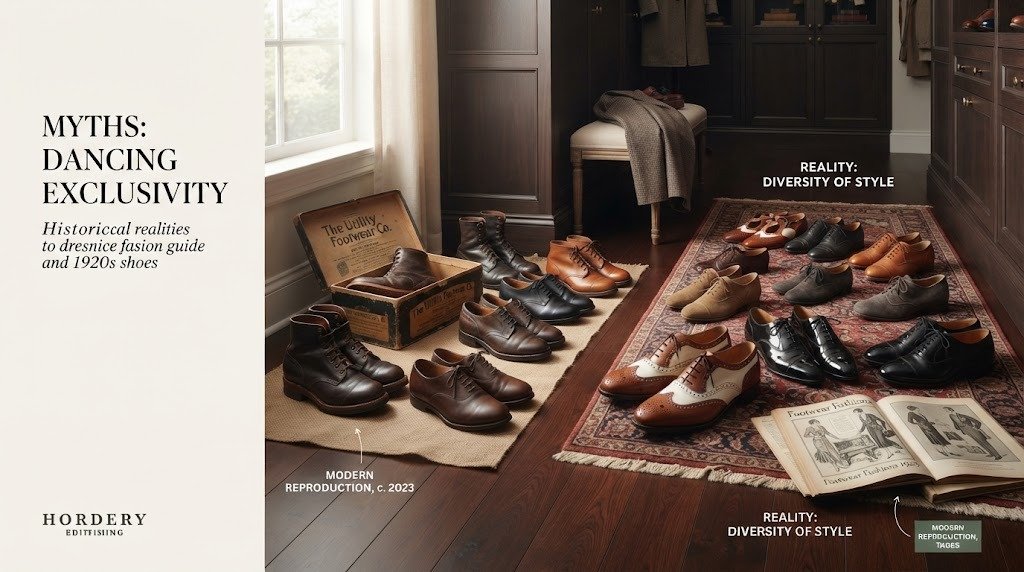
Myth: Every woman wore strap heels.
rds and other styles.
Myth: All 1920s shoes were made for dancing.
Many shoes were designed for everyday life, work, walking and sports.
Myth: Men’s shoes were always plain.
Men had different shoe designs and levels of decoration depending on the outfit and event .
Myth: A vintage looking shoe must be antique.
Modern shoes can copy from the past shapes and designs so Look alone does not prove age.
Conclusion
1920s shoes were more different than the familiar flapper image shows . strap heels Mary Janes pumps Oxfords and Useful shoes all had a place during the decade.
To create or study a 1920s shoe look, consider the shoe’s design material purpose and relationship to the rest of the outfit. Dated photographs and museum collections are good for understanding what people actually wore during the period.
FAQs
What were the most popular shoes in the 1920s?
Popular styles included strap heels, Mary Janes closed toe pumps and lace up Oxfords. The choice depended on the event and the wearer.
What shoes did flappers wear?
Flapper outfits are often associated with strap heels, Mary Janes and Fancy evening shoes. However, flappers did not all wear the same shoes .
Were 1920s shoes comfortable?
Comfort depended on the shoe fit Types of material and condition. Lower heels and Useful lace up shoes could be better for everyday Things to do .
What colors were common in 1920s shoes?
Dark and neutral colors were common in everyday shoes while evening shoes could feature satin velvet brocade or fancy finishes.
Did men wear Oxford shoes in the 1920s?
Yes. Oxford shoes were a common part of men’s shoes and could be worn with suits and other tailored clothing.
How can I choose shoes for a 1920s themed outfit?
Choose shoes based on the outfit and event . Traps and Fancy pumps suit evening looks while Oxfords and simpler shoes work well for daytime styles.

 By
By

 By
By