
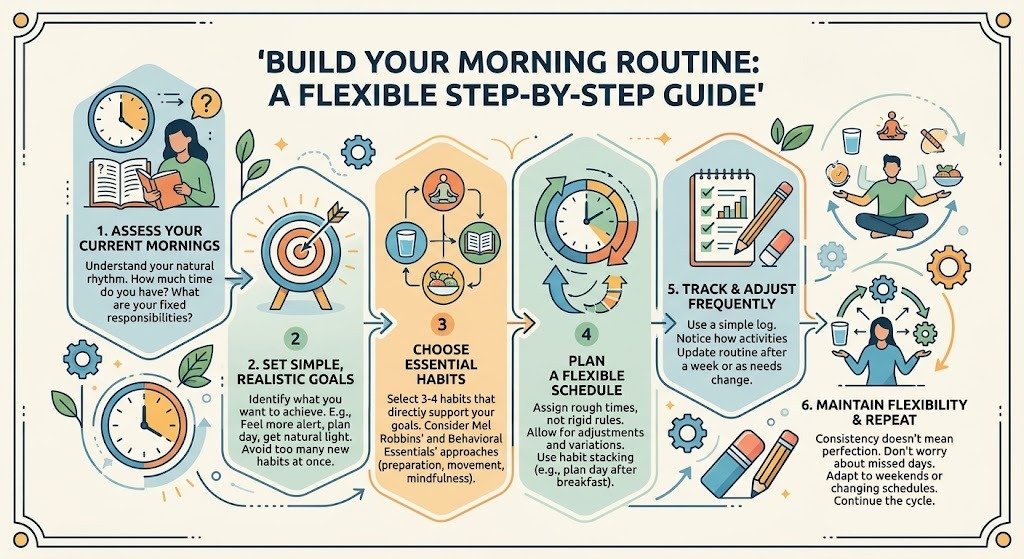

Further competitor observationsYour Behaviour Gal presents a fivestep approachassess your current routine set goals track progress, increase activities gradually and repeat.
Mel Robbins’ episode focuses on evening preparation, getting out of bed, making the bed, delaying phone use, movement mindfulness and making progress on personal goals.
Behavioral Essentials emphasizes starting with a very short mindful activity planning ahead limiting technology and tracking how the routine feels.
The guide below combines practical planning with a flexible approach. It avoids treating any one influencer’s routine as a universal formula.
How to Build a Morning Routine in 8 Practical Steps?
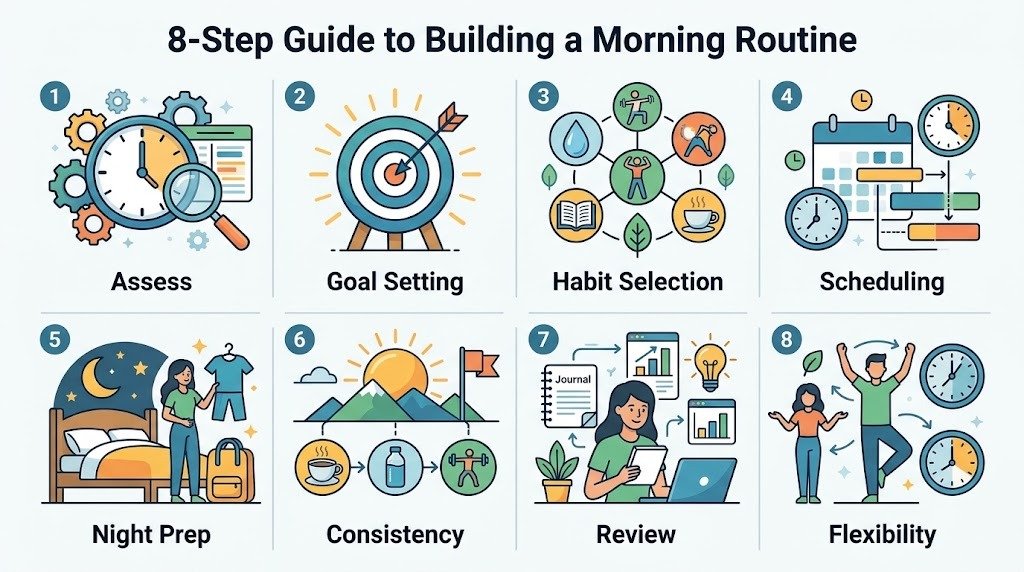
To build a morning routine first understand how you currently spend your mornings, decide what you want to improve and choose a few activities that support that goal. Then give each activity a realistic time, prepare what you can the night before and repeat the routine consistently. Review it regularly and adjust it when your schedule changes.
Understand Your Current Morning Habits
Before creating a new routine look at what you already do after waking up. You do not need to change everything. Start by identifying which activities help you and which ones make your morning more difficult.
Decide What You Want Your Routine to Achieve
A morning routine should have a clear purpose. Without one it can become a long list of activities that take time but do not solve your actual problems.
Think about what you need most
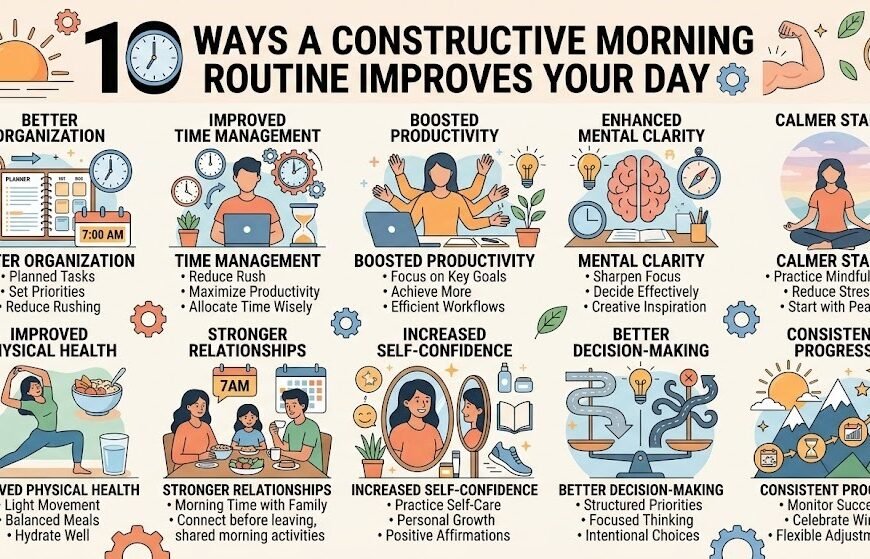
- Better organizationYou want to prepare for school or work without rushing.
- More focusYou want to identify your main priorities before starting tasks.
- Personal developmentYou want regular time for reading or learning.
- A calmer startYou want a few quiet minutes before your responsibilities begin.
- More movementYou want to include walking or gentle activity in your day.
Choose one main goal first. You can add other goals later if you have enough time.
For example if your main problem is forgetting important tasks, checking your schedule and preparing your belongings may be more useful than adding a long meditation session.
Set a Realistic WakeUp Time
Your wakeup time should fit your responsibilities and allow enough sleep. Waking up earlier is not automatically better and you do not need to copy a routine built around 5 a.m.
Start by working backward from the time you need to begin your day. Consider how long you need to get ready, eat , prepare your belongings and travel if necessary.
Sleep is an essential part of this decision. The CDC recommends 8–10 hours of sleep for teenagers aged 13–17 and at least seven hours for adults aged 18–60.
Give Each Activity a Time and Order
A routine becomes easier to follow when you know what comes next. Arrange your activities in an order that feels natural.
For example
- Wake up and get out of bed.
- Complete personal care.
- Drink water or have breakfast if you want it.
- Review your schedule.
- Prepare your belongings.
- Begin your first responsibility.
You can also connect a new habit to an activity you already perform. For example check your timetable after getting dressed or prepare your study materials after breakfast.
Reduce Unnecessary Morning Distractions
Some activities can take more time than you expect. Checking social media, watching videos or repeatedly switching between notifications may interrupt your preparation. You do not necessarily need to avoid all technology. Instead, decide when it is useful.
Try these simple boundaries
- Keep your phone away while completing your first important activity.
- Check messages after getting ready if they are not urgent.
- Avoid opening several apps when you only need to check your calendar.
- Use an alarm or reminder for activities that are easy to forget.
If you need your phone for school work or family communication use it for that purpose. The goal is to manage distractions not to follow an unrealistic rule about technology.
Track Your Progress and Adjust the Routine
After creating your routine give yourself time to practise it. A simple checklist can help you notice which activities you complete regularly and which ones need adjustment.
For example
| Habit | Monday | Tuesday | Wednesday | Thursday | Friday |
| Complete personal care | ✓ | ✓ | ✓ | ✓ | ✓ |
| Review daily priorities | ✓ | ✓ | — | ✓ | ✓ |
| Prepare belongings | ✓ | ✓ | ✓ | — | ✓ |
| Read for a few minutes | — | ✓ | ✓ | ✓ | — |
What Does a Simple Morning Routine Look Like?
A simple morning routine can take 10, 20 or 30 minutes depending on your responsibilities. The best version is one you can realistically follow while still allowing enough time for sleep, personal care and necessary preparation. Here are three examples
| Available time | Example routine | Best suited to |
| 10 minutes | Personal care check schedule prepare essentials | Busy mornings |
| 20 minutes | Personal care breakfast review priorities prepare belongings | Students and professionals |
| 30 minutes | Personal care breakfast gentle movement planning reading | People with more flexible mornings |
These examples do not include every person’s travel family or school responsibilities. Adjust the order and timing to fit your day.
How Long Does It Take to Build a Morning Routine?
There is no fixed number of days required to build a morning routine. Some simple activities may begin to feel familiar relatively quickly while more complex habits can take longer to become automatic.
A 2024 systematic review and metaanalysis examined 20 studies with 2601 participants. It found substantial variation in the time required for healthrelated habits to develop.
Common Mistakes to Avoid When Building a Morning Routine
A routine can become difficult to maintain when it is too demanding or does not match your actual schedule. Watch out for these common mistakes.
Adding Too Many Habits at Once
Trying to include reading exercise, journaling meditation, meal preparation and several other activities immediately can make your morning feel crowded.
Start with two or three useful habits. Add another only when the existing routine feels manageable.
Copying Someone Else’s Routine
A routine shared by an influencer or business owner may reflect their personal responsibilities, preferences and available time. It does not mean the same schedule will work for you. Use other routines as inspiration but make your own decisions.
Waking Up Earlier Without Protecting Sleep
Reducing sleep to create extra morning time can make it harder to concentrate and manage everyday responsibilities. Set your wakeup time around your sleep needs, not around an online trend.
Making the Routine Too Strict
Unexpected events, changes in school or work schedules and family responsibilities can interrupt a routine. Allow room for these changes.
How Can You Stay Consistent With Your Morning Routine?
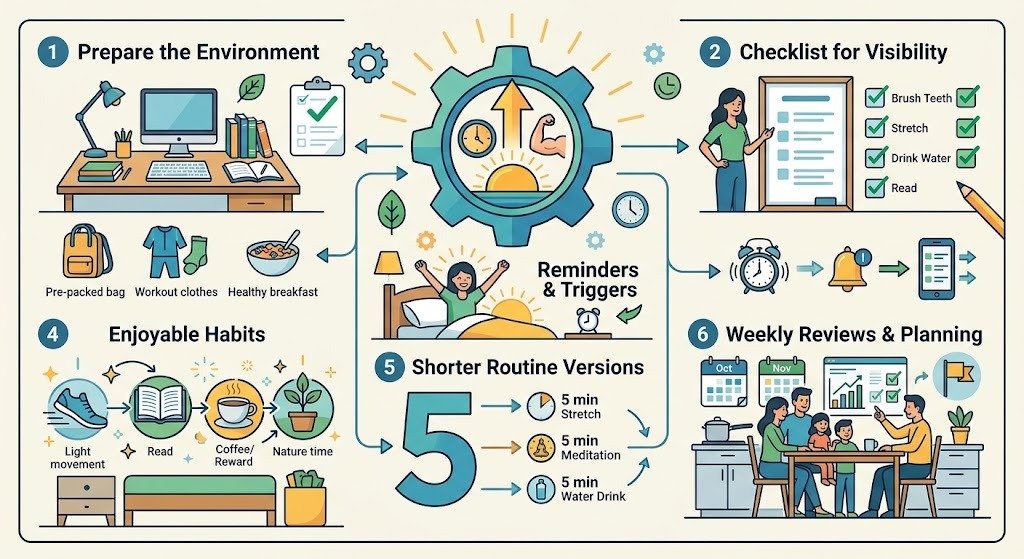
Consistency comes from making your routine manageable and connecting it to your everyday life. You do not need perfect mornings to make progress.
Try these approaches
- Keep the routine visiblePlace a short checklist somewhere you can easily see it.
- Prepare your environmentKeep frequently used items in predictable places.
- Use reminders when neededAn alarm or calendar reminder can help you remember important activities.
- Make habits enjoyableChoose activities you genuinely want to repeat.
- Create a shorter versionDecide which activities matter most when time is limited.
- Review your routine weeklyRemove activities that are not useful and adjust timings that regularly cause problems.
Conclusion
Learning how to build a morning routine starts with understanding your needs and choosing activities that make your day easier to manage. You do not need an expensive planner, a long list of habits or an extremely early wakeup time.
Begin with two or three realistic activities, prepare what you can the night before and give yourself time to practise. Review your progress and make changes when your schedule or priorities shift.
Start with one small improvement tomorrow. A routine that fits your everyday life is more useful than a perfect schedule you cannot maintain.
FAQs
1. What is the first step in building a morning routine?
Start by observing your current mornings and identifying what you want to improve. Choose one practical goal such as getting ready on time or organizing your daily tasks before adding new habits.
2. How many habits should I include in my morning routine?
Begin with two or three activities that support your main goal. Once you can manage them comfortably you can consider adding another habit if you have enough time.
3. Can I build a morning routine if I am not a morning person?
Yes. You do not need to wake up extremely early to have a useful routine. Choose a wakeup time that suits your responsibilities and allows you to get enough sleep.
4. Should I use my phone during my morning routine?
You can use your phone when it serves a useful purpose such as checking your calendar or communicating about an important matter. However, limiting unnecessary notifications and social media can help you stay focused on your planned activities.

 By

 By